Lowell Quality Drywall & Plaster logo Lowell Quality Drywall & Plaster

Drywall Services in Lowell, MA

Residential and commercial drywall — each entry links to a full breakdown of cost, process, and what to expect.

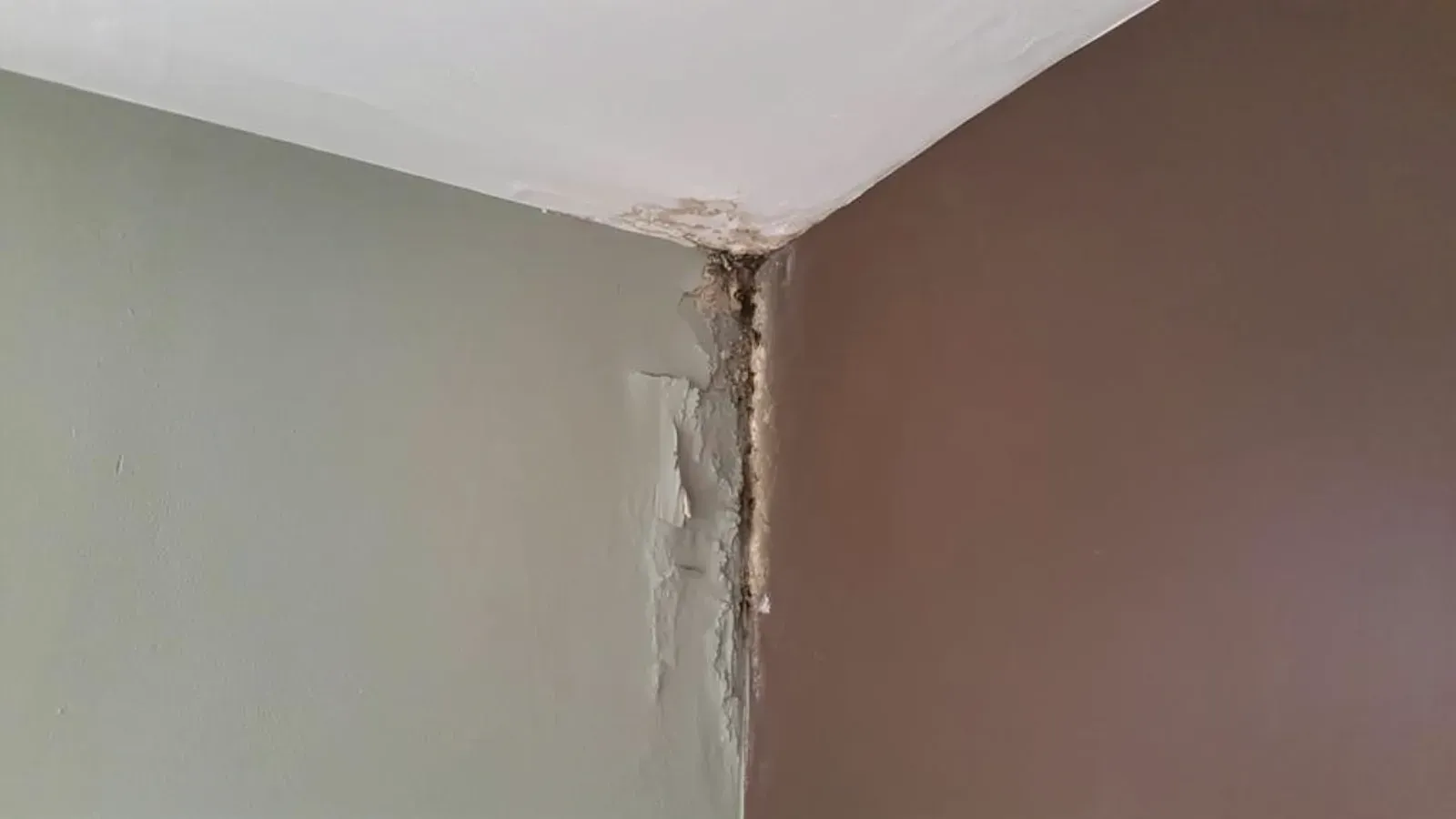
Water staining bleeding down the top corner of an interior room, the paint bubbled and flaking below it

Water Damage Drywall Repair

A stained ceiling or a soft patch of drywall after a leak is common in Lowell's triple-deckers and two-families, where a pipe failure two floors up often shows up as a mark on someone else's ceiling. Lowell Quality Drywall & Plaster treats an active leak as an emergency call, because wet gypsum board starts growing mold within a day or two and loses its structural integrity once the paper facing saturates. Every water damage job starts with a moisture meter, not a utility knife. The crew checks the drywall, the framing behind it, and any insulation in the cavity to map how far the water actually traveled, since the visible stain is rarely the whole story. Only the wet material comes out, cut back to dry, sound framing, and the cavity is rechecked before any new board goes up. The rebuild matches the original finish, whether that's a knockdown texture, an orange-peel spray, or a smooth Level 5 skim, so the repair disappears once it's painted. In bathrooms, basements, and other repeat-risk areas, the rebuild uses mold-resistant board instead of standard Sheetrock. Landlords and property managers across Lowell, where more than 60 percent of residents rent, often need a stained ceiling fixed and documented before it becomes a habitability issue. Lowell Quality Drywall & Plaster photographs the damage and logs moisture readings that go straight to an insurance adjuster, whether the leak originated in the unit itself or crossed over from a neighbor's plumbing.
Request a moisture assessment
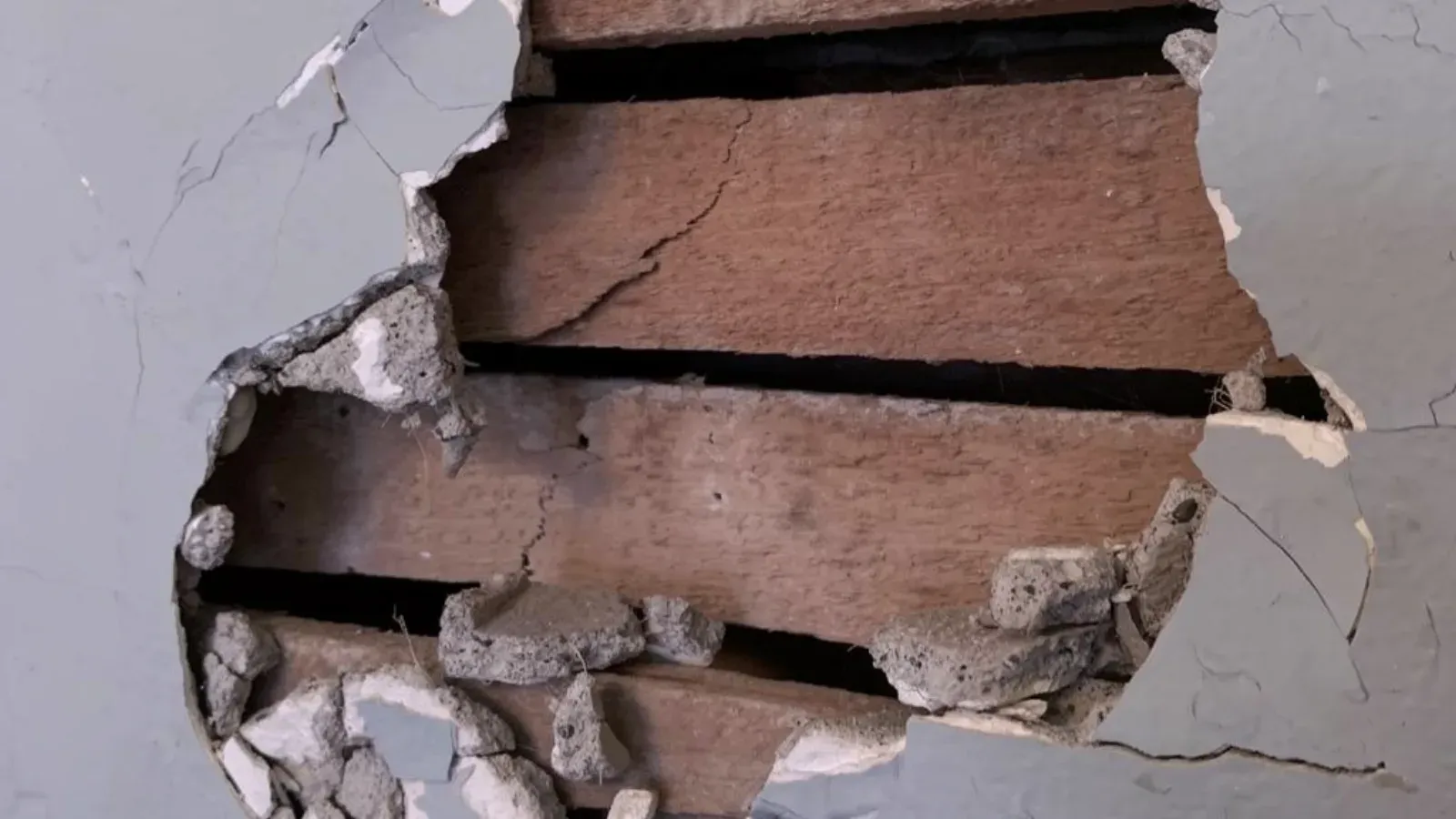
Hole broken through a painted plaster wall, exposing the horizontal wood lath behind it and the crumbling plaster keys around the opening

Plaster Repair & Plaster-to-Drywall Conversion

Belvidere's Victorians and Lowell's mill-worker cottages and triple-deckers were built with hand-troweled, three-coat plaster over wood lath, decades before drywall existed. A century of settling and seasonal movement leaves that plaster keyed tightly in some spots and barely hanging on in others, often within the same wall. Lowell Quality Drywall & Plaster starts every job by tap-testing the surface to map which areas are still locked to the lath and which have separated. Where enough of the original key survives, re-keying and a skim coat stabilize and blend the repair into the surrounding wall. Where the lath has rotted or too much plaster has already fallen, converting to drywall finished to a true Level 5 skim is the more honest answer, one that reads as plaster once it's painted rather than as an obvious modern patch. Because Lowell's housing predates 1978 almost across the board, disturbing old plaster means EPA RRP lead-safe work practices apply by default, not as a special case. Lowell Quality Drywall & Plaster sets up containment before cutting into old plaster and lath, consistent with the firm's EPA RRP Lead-Safe Certified status. Belvidere's Victorian homes, with ornamental plaster trim and 12-foot ceilings, more often call for historic-sensitive skim work that preserves original wall profiles. The city's denser stock of mill-worker cottages and triple-deckers more often makes practical sense as a conversion, especially when a room is already opened up for other renovation work.

Get a plaster assessment
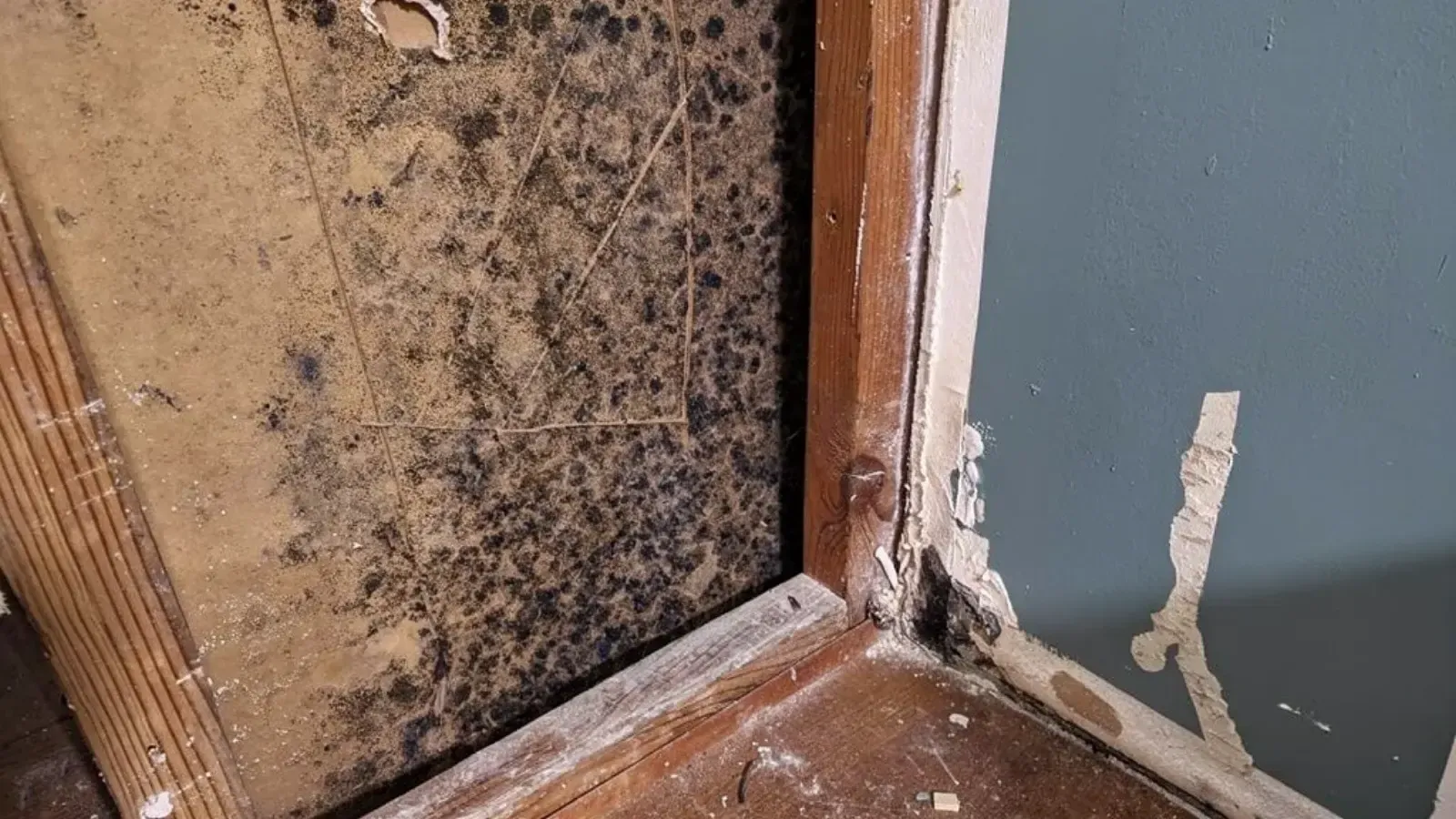
A bathroom wall corner opened beside the tub, mould spread across the exposed board behind

Mold Drywall Replacement

Lowell sits on the Merrimack and Concord Rivers with a historic power-canal network running through its low-lying blocks, and that geography shows up directly in basement moisture. Homes near the rivers and canals see periodic flood exposure, and even properties farther out deal with high water tables that let moisture wick into basement walls year-round. Once drywall stays damp long enough, mold tends to show up first as a faint discoloration near the floor line before spreading. Lowell Quality Drywall & Plaster draws a clear line between a cleanup job and a remediation job. A small, contained patch tied to a known and resolved moisture source can usually be cut out and rebuilt directly. Mold that's spread across a larger section, that keeps returning, or that's affecting a household with young kids, older residents, or anyone with respiratory sensitivity, calls for a licensed remediation specialist to handle containment and air quality first, consistent with MassDEP guidance, before any new board goes up. Removal always means cutting back past the visible discoloration to a substrate that's checked and confirmed dry, since mold can travel along a stud bay further than it shows on the surface. For basement walls and any space with a standing moisture risk, mold-resistant board replaces standard paper-faced Sheetrock as the default rebuild material. Over 60 percent of Lowell residents rent, and basement or ground-floor mold in a rental often goes unreported for months. Lowell Quality Drywall & Plaster works directly with landlords and property managers across the city's rental housing to close that gap with a documented, professional repair.

Get a mold assessment
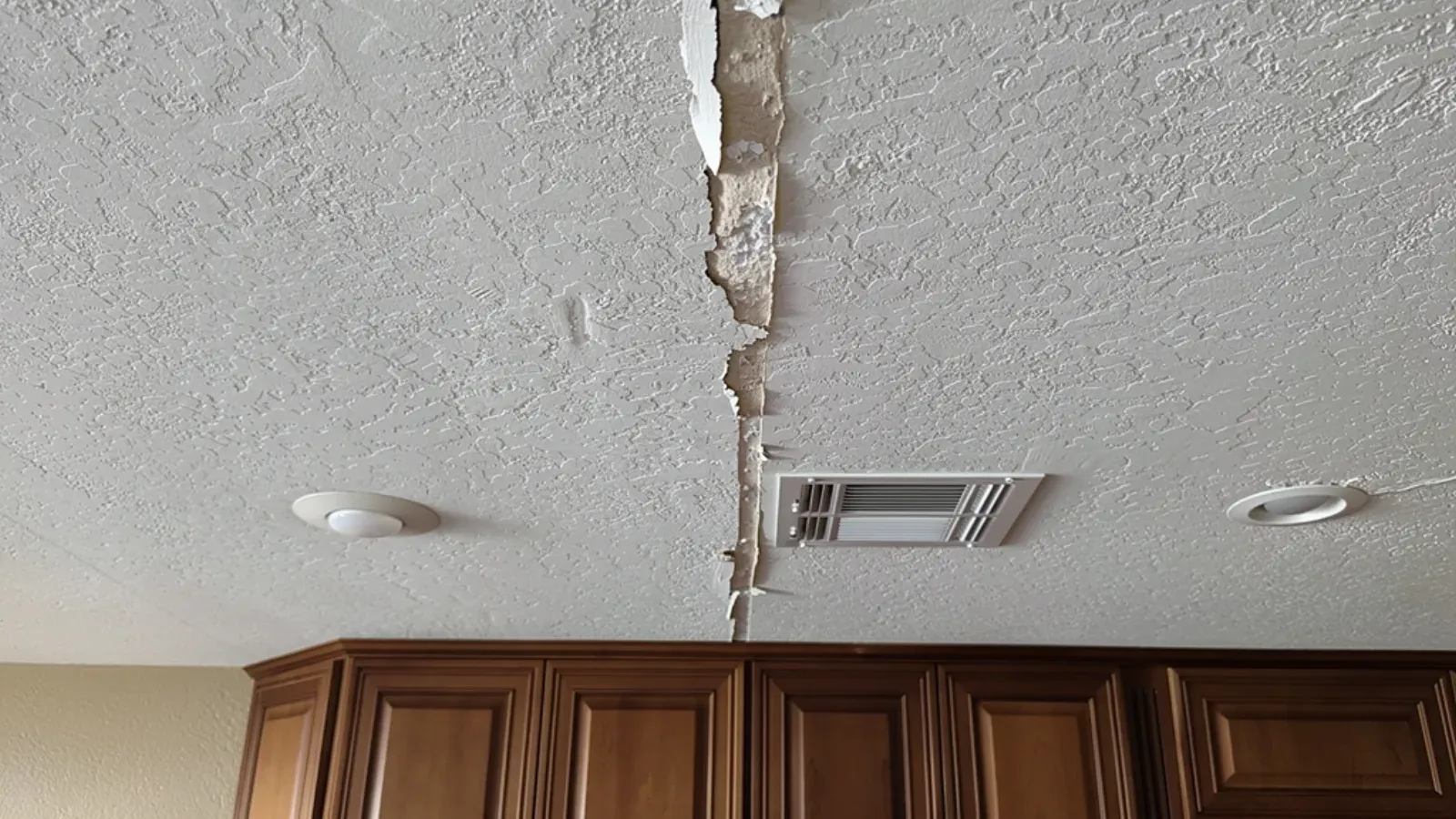
A crack running through a textured kitchen ceiling beside a white rectangular ceiling air register, the paint and joint tape split open along its length, above stained wood upper cabinets

Ceiling Repair

A ceiling that bows in the middle, cracks across the room, or sounds hollow when tapped is telling you the surface has let go overhead, and in Lowell that surface is often century-old plaster troweled onto wood lath. Lowell Quality Drywall & Plaster treats ceilings as their own discipline, because a ceiling is lit from the side by every window and lamp in the room, and that raking light throws a shadow off any ridge or low spot a wall would hide. Where old plaster has separated from its lath but is still solid, the crew re-anchors it and saves the original ceiling rather than tearing out a room's worth of historic plaster. Where the plaster or drywall has failed beyond saving, that section is cut back to sound framing and rebuilt in board, taped, and bridged so cracks do not telegraph back through. The finish is matched to what the rest of the ceiling carries, a hand-troweled skim in a Belvidere Victorian, a sprayed knockdown or orange-peel texture in a rental, or a flat, smooth surface in a downtown mill-loft conversion. Every repair is checked at an angle under raking light before it is primed. Ceiling work rains dust and debris more than any other repair, so floors and furniture are covered first, high loft and stairwell ceilings get proper staging, and any wet or moldy cavity above the ceiling is flagged before the surface is ever closed in.

Get your ceiling inspected
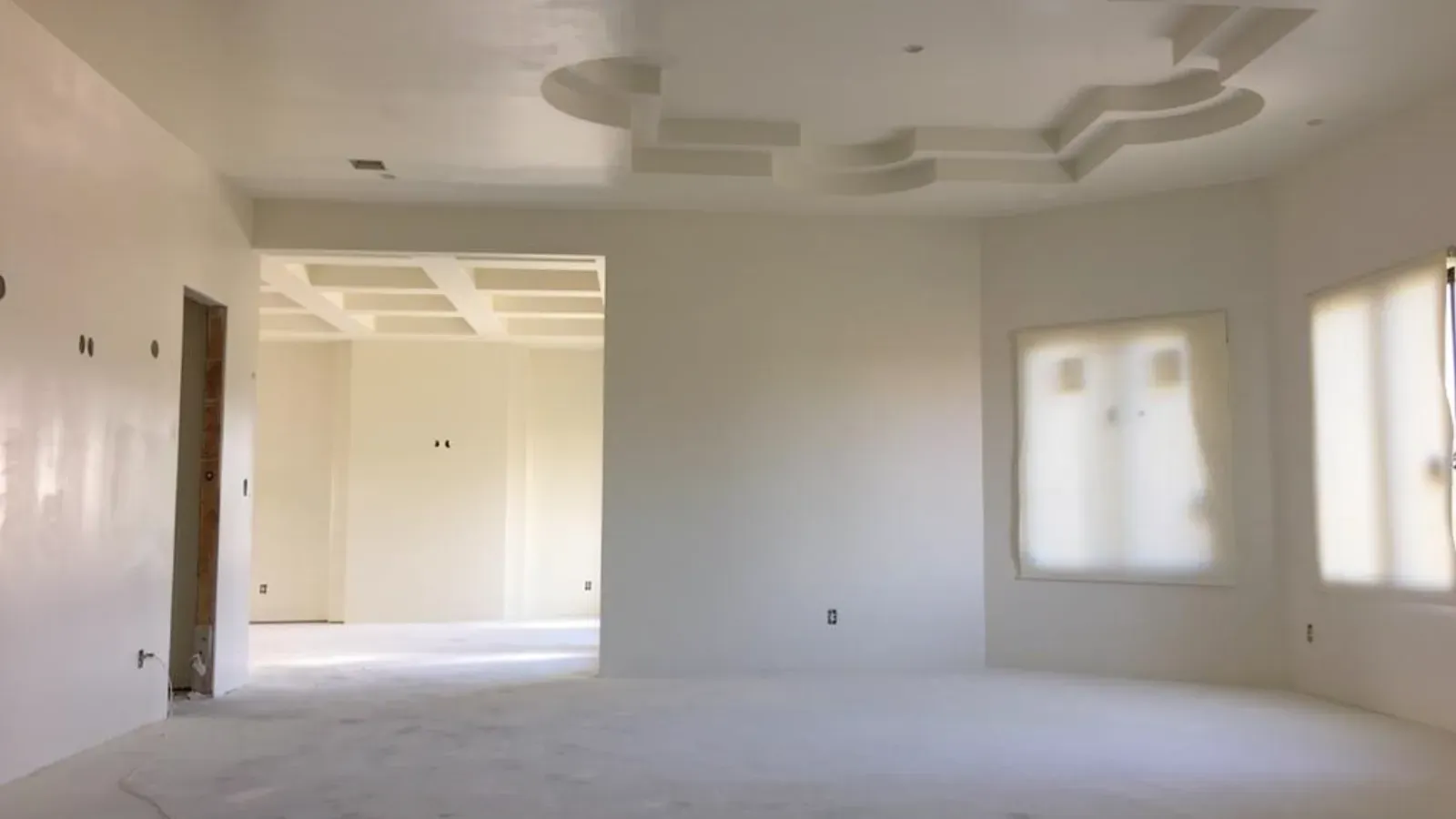
An open interior skim-coated throughout to a smooth uniform finish, with a stepped tray ceiling and plastic-masked windows

Skim Coat & Level 5 Finish

Most walls are finished only at the seams and fasteners, with the field of the board left bare. Under ordinary paint that looks fine, but flat paint, high-gloss paint, and low raking light from a window or a sconce turn every taped seam into a faint shadow line. Lowell Quality Drywall & Plaster closes that gap by skimming the entire surface, so the whole plane is one continuous coat instead of smooth only where the seams sit. That full-surface skim is what the GA-214 standard calls a Level 5 finish. Skim coating solves two different problems in Lowell. On new board in an addition or a gut renovation, it upgrades a builder-grade Level 4 to a true Level 5 before the painters arrive. On old walls, it resurfaces. A great deal of Lowell's stock is original lath-and-plaster, sound after a century but rough, uneven, and mapped with old patches. Rather than tear that out, the crew skims over the sound plaster to bring it back to one smooth surface, which keeps the original wall in place in Belvidere homes and the mill-loft conversions downtown. The work is layered, not a single pass. Thin coats of joint compound go on, dry, and get sanded flat, one after another, with a final check under a raking work light that reveals any ripple ordinary front light would hide. Only once the plane reads true does Lowell Quality Drywall & Plaster prime it and hand it off ready for paint.

Get a smooth-finish quote
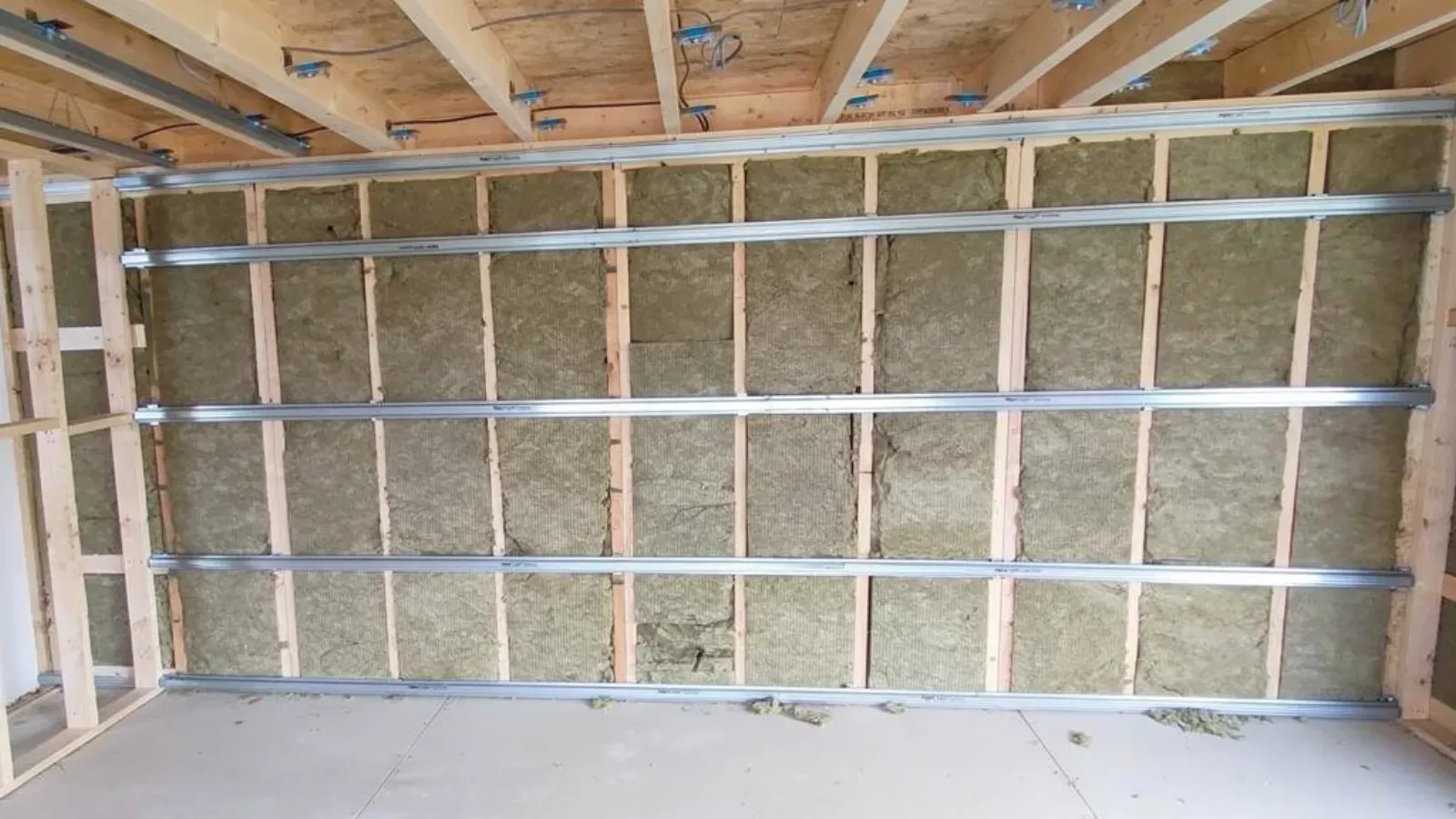
Interior stud wall with mineral wool insulation between the studs and horizontal resilient channels fixed across them, ready for a second layer of drywall

Soundproof Drywall

The most common misconception about a quiet wall is that it's just a heavier one. Adding a layer of board helps a little, but real soundproofing is an assembly working together, and every piece has a job. Lowell Quality Drywall & Plaster builds to a target STC, or Sound Transmission Class, the rating that measures how well a wall blocks airborne sound, so the result is measured performance rather than a guess. That assembly combines sound-damping board (QuietRock, or a double layer with Green Glue between the sheets), resilient channel or isolation clips that break the vibration path through the framing, an insulated cavity, and airtight sealing at every edge. Leave any one out and the wall underperforms, because sound, like water, finds the weakest point and pours through it. Lowell was built dense. The city's stock of triple-deckers and two-families puts households next to and on top of each other, sharing party walls and floor-ceiling assemblies that were never built to modern sound standards. Downtown, the mill-loft conversions add hard surfaces and shared partitions, and the student rentals around UMass Lowell drive noise complaints between units. Sound isolation is a recurring need here, not a luxury. A wall between two units is usually a demising wall that has to be fire-rated as well as quiet, so Lowell Quality Drywall & Plaster builds both into one assembly, using Type X board for the UL rating and layering in the sound-isolation methods that bring the STC up at the same time.

Discuss a quiet-wall build
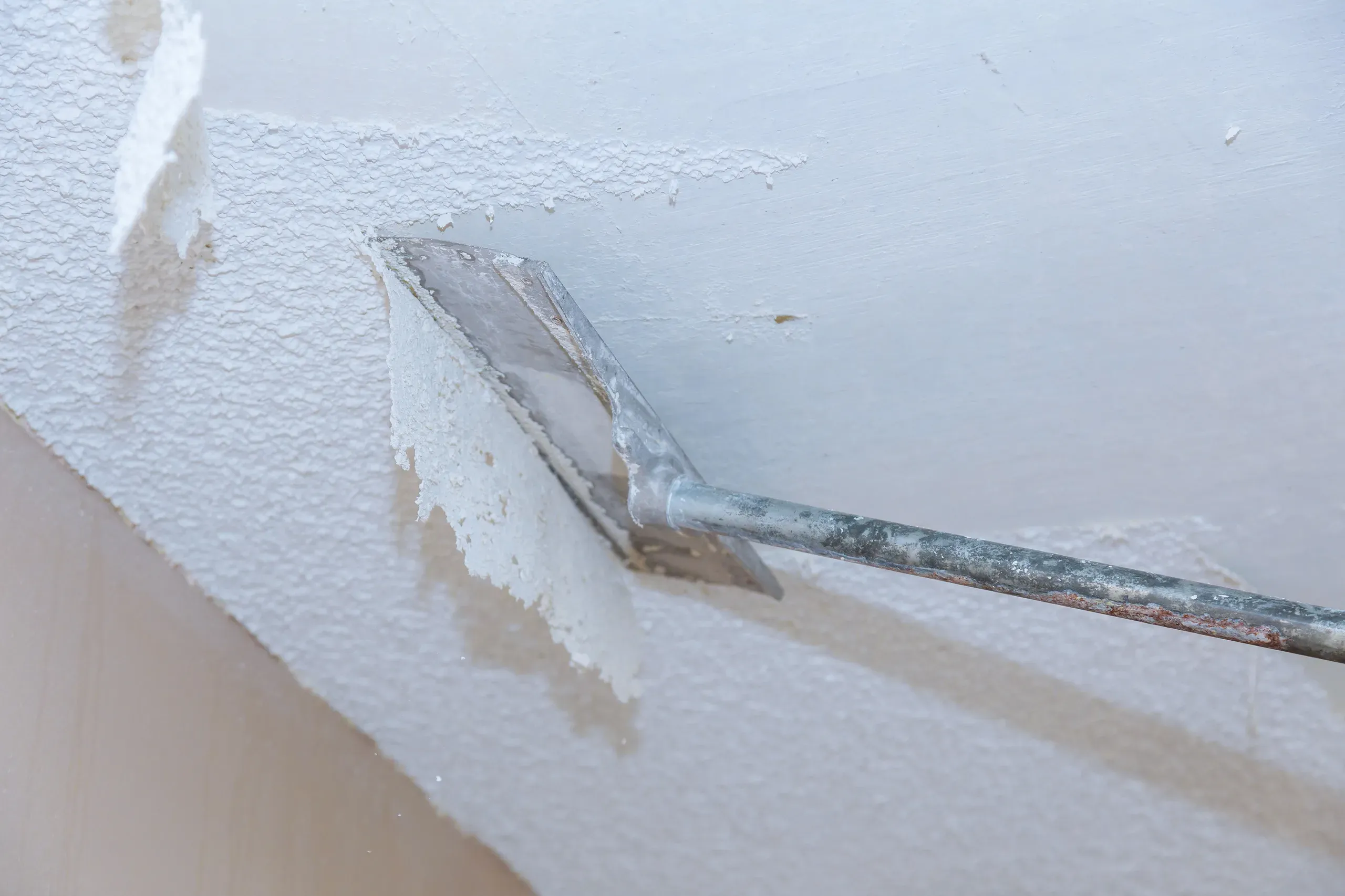
Close-up of a scraper blade lifting popcorn texture off a ceiling, the stripped surface smooth behind it

Popcorn Ceiling Removal

A popcorn ceiling looks like a cosmetic problem, and in the end it is, but the first step is not a scraper. Acoustic ceiling texture sprayed before the early 1980s commonly contained asbestos, and scraping it dry is exactly what sends fibers into the air. Nearly all of Lowell's housing predates 1978, so almost every popcorn ceiling in the city is old enough to warrant a test. Lowell Quality Drywall & Plaster takes a sample and sends it for analysis before anything is disturbed, and only goes forward once the ceiling tests clear. If it tests positive, the work stops and the owner is directed to a licensed abatement contractor, since that is a separate regulated trade, not drywall work. Once a ceiling tests clear, there are two ways to a smooth finish. Unpainted popcorn absorbs water, so it's lightly wetted and scraped off. A painted ceiling resists the scraper because the paint seals the texture, so it often gets skimmed over smooth instead. The crew decides scrape versus skim on-site based on whether the ceiling is painted and what shape it's in. Scraping usually reveals why the texture was there in the first place: uncoated seams, hairline cracks, or old water repairs the popcorn was hiding. That's expected. After the texture comes off, Lowell Quality Drywall & Plaster repairs what's underneath, skims the whole ceiling flat, and primes it ready for paint, so the finished result is a true smooth surface rather than a scraped-down bumpy one.

Book a ceiling assessment
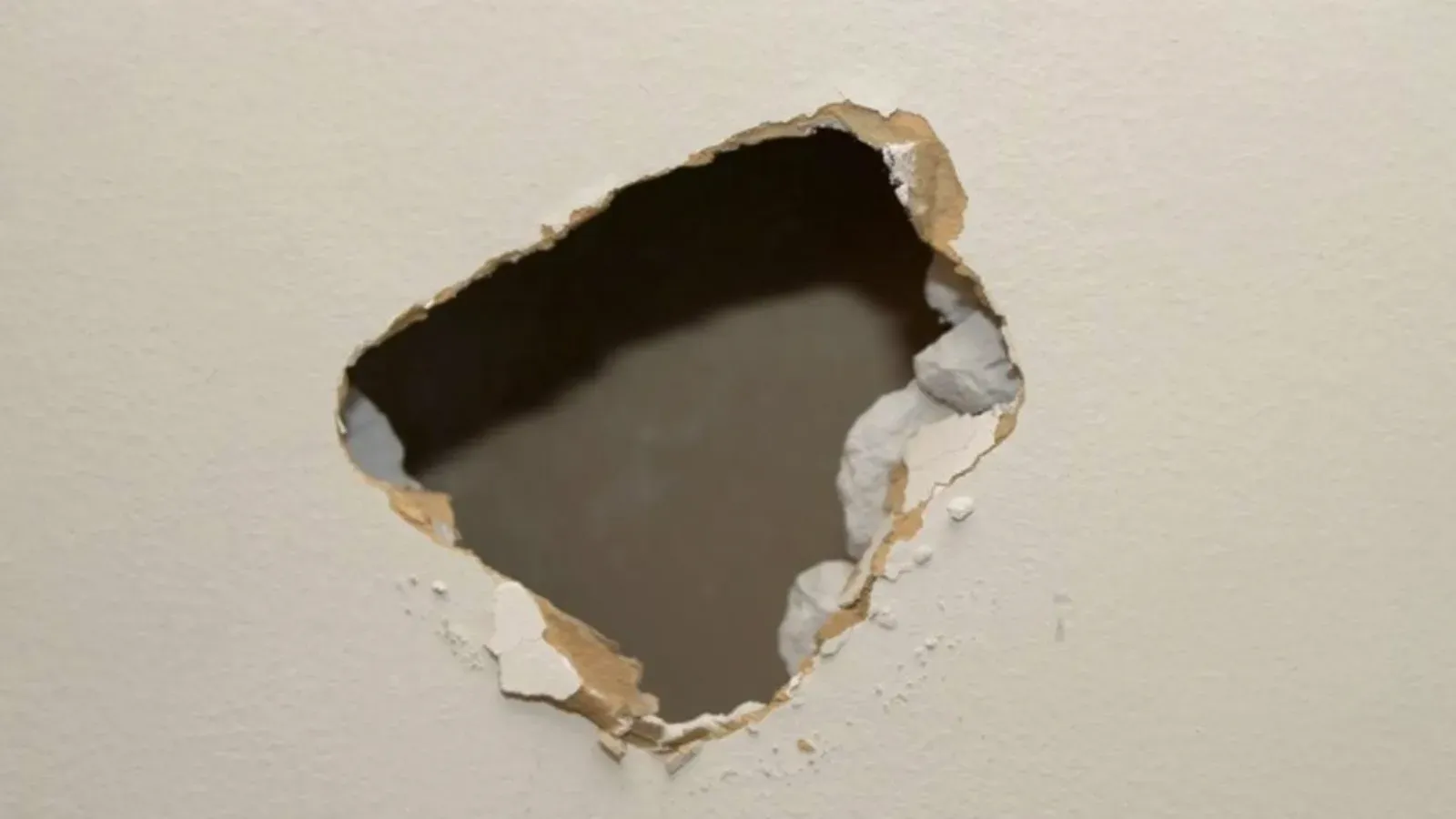
Large irregular hole broken through a painted interior drywall wall, torn paper facing and crumbling gypsum chunks around the jagged edges exposing the dark cavity behind

Drywall Repair & Patching

A doorknob hole behind a door, a shelf or TV mount that tore its anchors out of the wall, a row of dents behind a bed, or a hardware-store patch that now bulges worse than the original damage, these are the everyday drywall repairs Lowell Quality Drywall & Plaster handles across the city. The difference between a fill and a repair is whether the hole disappears, and that is the part that takes a finisher rather than a tube of compound. Small holes get a proper backed patch, and larger ones, from a fist up to a foot or more, get a cut-in drywall plug set on backing, taped, and feathered wide so the edges melt into the wall. A stick-on mesh disc telegraphs a bump the first time light rakes across it, so it is not used where the repair has to vanish. More than sixty percent of Lowell's housing is renter-occupied, and neighborhoods like Pawtucketville near UMass Lowell, The Acre, and Back Central turn units over constantly. A move-out wall is rarely one dramatic hole, it is thirty nail holes, a few anchor holes, and a scuffed corner, so a turnover is scoped as one job and priced by the room to keep the unit ready to lease. Every repair is matched to the wall's texture, whether that is a smooth finish, a light orange peel, a knockdown, or an older plaster skim, and primed so the patch takes paint at the same sheen as the wall around it rather than flashing a dull spot through the color.

Book a patch-and-blend
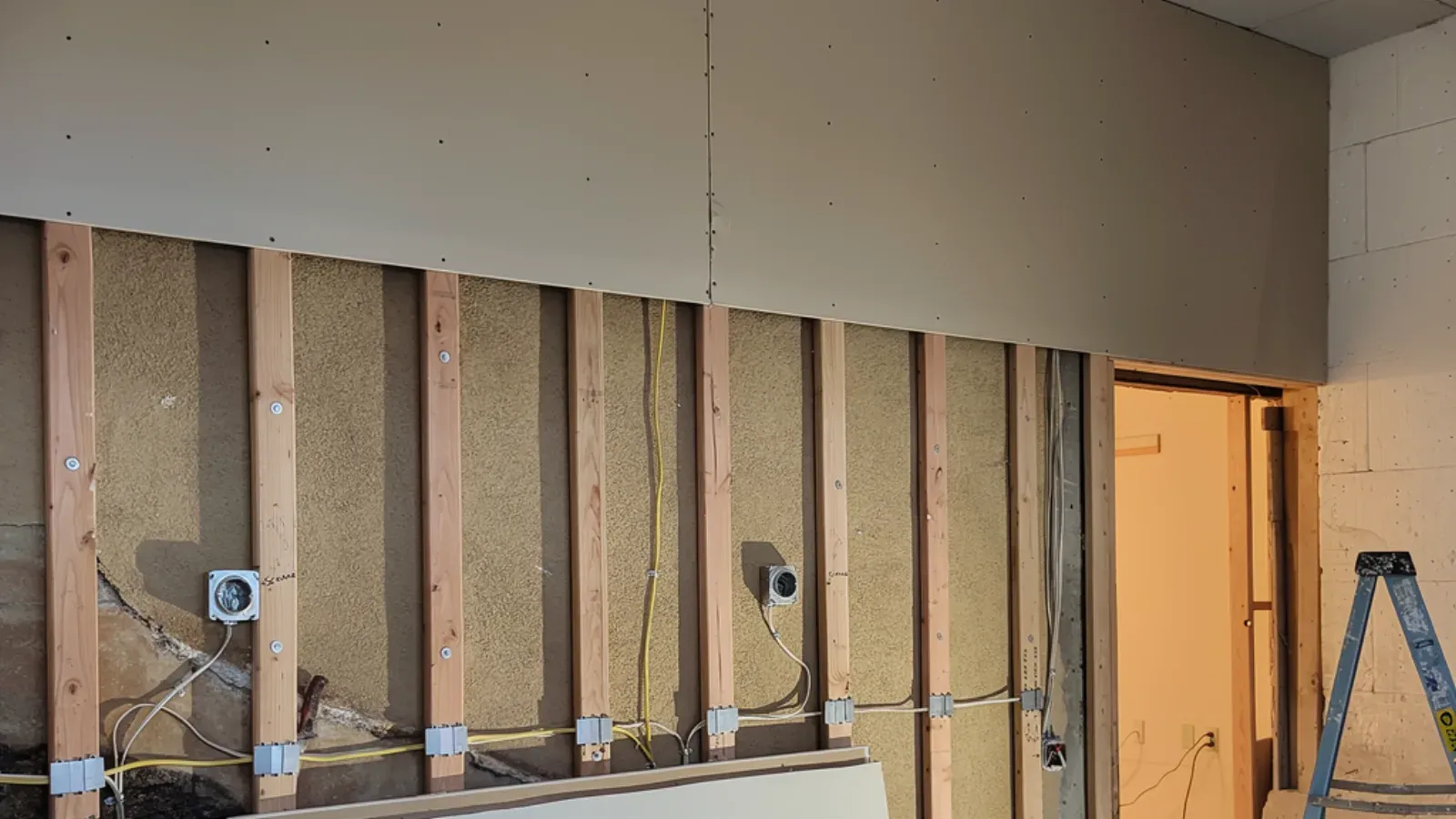
Bare gypsum drywall hung across the upper half of an interior wall, the lower stud bays still open with insulation and electrical boxes visible

Drywall Installation & Hanging

A framed addition, an attic conversion, or a gutted room down to the studs is open and unusable until the walls and ceilings are boarded and finished. Lowell Quality Drywall & Plaster hangs and finishes drywall on new framing, taking a space from inspected studs to a flat, primed-ready surface that paint and trim can follow. Hanging drywall well is a different trade from framing the wall behind it. The crew measures and cuts board to fit, fastens it to studs and joists on the correct screw schedule, staggers seams so no joint runs floor to ceiling, and sets outside corners with corner bead. The hang decides how good the finish can be, so fasteners are set just below the paper rather than blown through it, giving the taper a clean surface to build on. Board is matched to the location and the Massachusetts State Building Code. Walls take ½″ sheetrock, ceilings and wide spans get ⅝″ to resist sag, rated assemblies get ⅝″ Type X, and a new bathroom gets moisture-resistant board. The seams are finished to the level the room's lighting and paint call for, a standard Level 4 for most walls or a Level 5 skim where raking light or gloss paint would telegraph a lesser finish. Much of Lowell's original housing is lath-and-plaster, so new drywall in an addition often has to blend to old plaster in the existing rooms. Lowell Quality Drywall & Plaster solves that with a skim coat at the transition, and schedules the hang and finish to keep the project on the critical path so the walls are ready for the painter on the promised day.

Get an installation quote
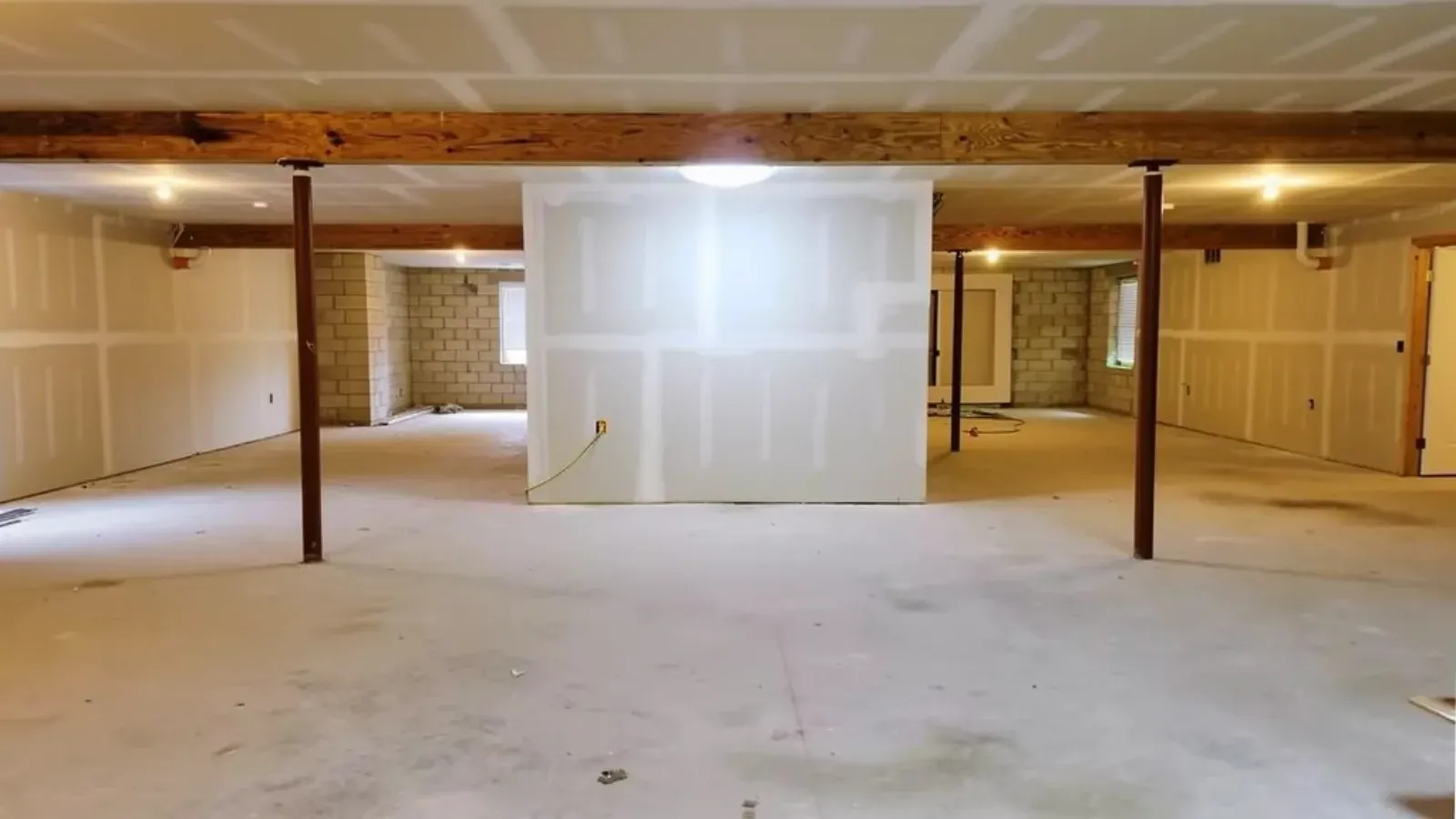
An open basement interior with a newly drywalled partition wall, its seams taped and coated, under a taped drywall ceiling

Basement Drywall Finishing

An unfinished basement is the cheapest square footage a Lowell homeowner will ever add, but it can't be boarded like an upstairs bedroom. The foundation walls stay cool and pull moisture out of humid air, so Lowell Quality Drywall & Plaster finishes a basement with the framing and board a below-grade space actually needs. The walls are framed off the masonry with a deliberate gap and pressure-treated bottom plates where wood meets concrete, then hung with moisture-resistant board on the foundation-facing walls rather than standard paper-faced sheetrock. Standard board's paper facing feeds mold when it stays damp, which is exactly the risk a basement presents, so the board choice is the difference between a finish that lasts and one that fails in a few winters. Lowell's old masonry, brick, and fieldstone-and-block foundations are rarely plumb, so the framing is built to a true line rather than fastened to an uneven wall. The ceiling is boarded flat where it can be and fitted with access panels where shutoff valves, cleanouts, and junction boxes need to stay reachable. Where the plan adds a below-grade bathroom or laundry, cement board and waterproofing handle the wet areas. Finished to a paintable Level 4, the space reads like the rest of the house once it's painted and floored. The one rule that never bends is that a basement gets finished dry: the walkthrough includes a moisture check, and Lowell Quality Drywall & Plaster will say plainly when a space needs waterproofing or a sump before any board goes up.

Plan a basement finish
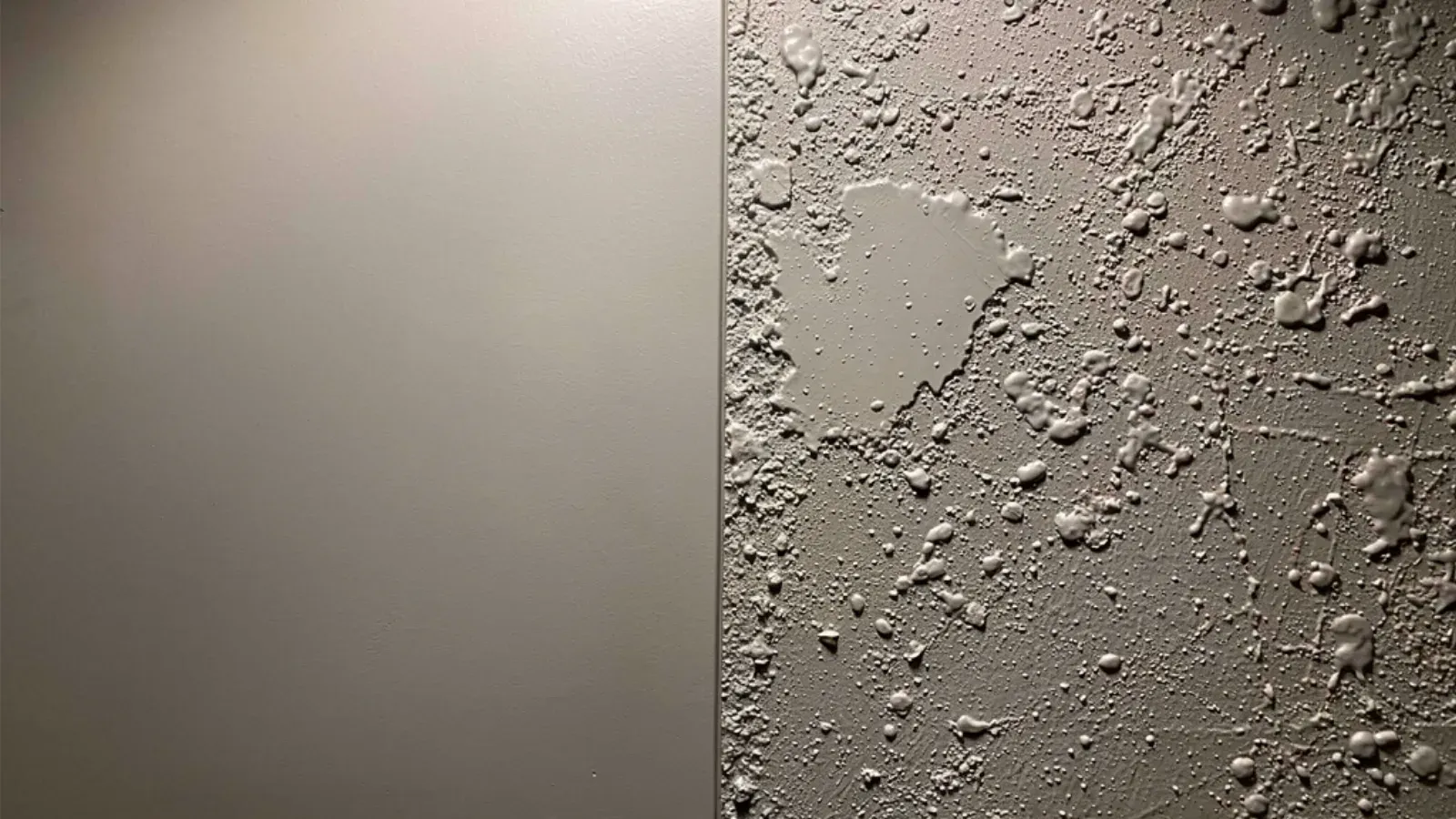
A smooth painted wall meeting a knockdown texture along a vertical line in raking light

Texture Matching

A repair is only finished when you can't find it. On a smooth wall that's a clean skim, but most of Lowell's walls and ceilings carry a sprayed knockdown or a fine orange-peel stipple, and a patch that's finished flat and painted stands out worse than the hole did. Lowell Quality Drywall & Plaster matches the texture that's already there, reading the grain, spacing, and flatness of the surrounding pattern and reproducing it across the repair with the same tools and compound the original was made with. This is matching, not resurfacing: the goal isn't a smooth wall, it's a wall where the eye can't find where the old surface ended and the new one began. Homeowners are often surprised a repair looked fine until they painted it, then jumped out. Paint unifies color but exaggerates surface, so a dead-flat patch inside a textured wall catches light differently once the color is even. The fix is to reproduce the surrounding texture before paint, not to add another coat. The crew reads whether the surface is a fine orange peel or a heavier knockdown, dials the match in on a test board or an out-of-sight area, then applies and, for knockdown, flattens it at the same timing the original used. More than 60 percent of Lowell's residents rent, so turnover work is steady. A unit coming empty in Pawtucketville or the Highlands often has a dozen small patches from nail holes and door dings. Lowell Quality Drywall & Plaster blends them all into the existing texture in one visit so the walls read as one clean surface for the next tenant.

Get a texture-match quote
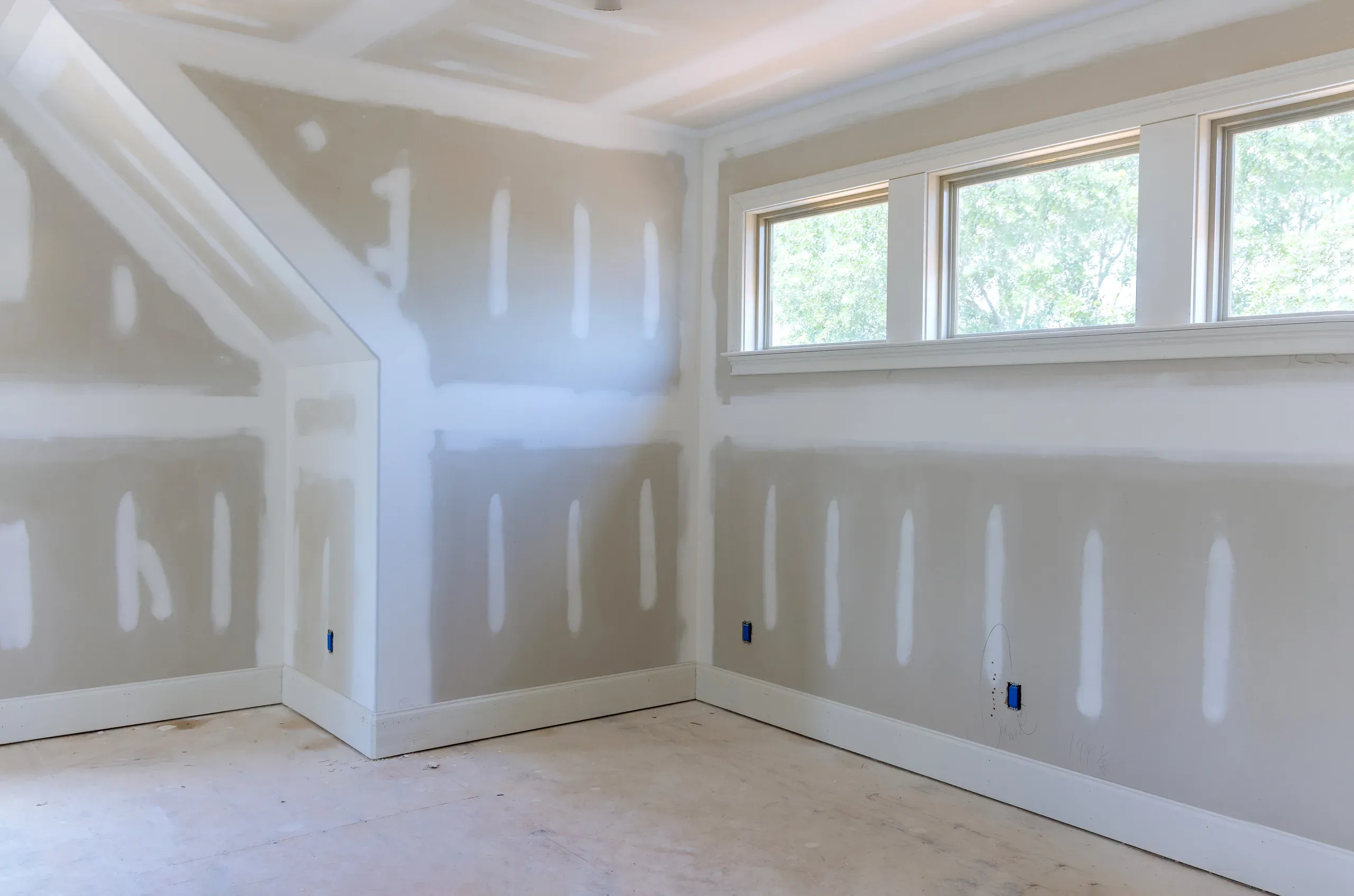
Room with a sloped dormer ceiling in drywall, seams taped and coated and fasteners spotted in white compound over grey board, baseboard and window casing already installed below a bank of three windows

Drywall Taping & Finishing

Hung board with every seam, corner, and screw head still showing can't be painted until it's finished, and finishing is the stage that decides how the whole room looks, because paint hides nothing underneath it. Lowell Quality Drywall & Plaster tapes and finishes drywall that's already up, turning rough board into a flat, feathered surface ready for the painter. The work is embedding tape over every seam and inside corner, setting corner bead on the outside corners, and coating the joints in successive passes of joint compound, each wider and thinner than the last, until the seam disappears into the board. Between coats the compound dries and is sanded. How many coats and how much sanding depends on the finish level the room needs. The Gypsum Association's GA-214 standard defines those levels. A Level 4, standard for most painted walls, coats the tape, corners, and fasteners smooth and reads flat under normal lighting. A Level 5 adds a thin skim over the entire surface, which earns its cost under raking window light, on walls getting gloss paint, or in open sightlines where a seam would otherwise show. The crew sets the level to the room rather than upselling a skim where a Level 4 will look perfect. This is finishing only, no framing and no hanging. Lowell Quality Drywall & Plaster finishes board a homeowner, framer, or hanging crew put up, and also corrects rough earlier finishes, re-coating telegraphing seams or skimming a whole wall before repaint, so the surface is right before the color goes on.

Book a finishing crew
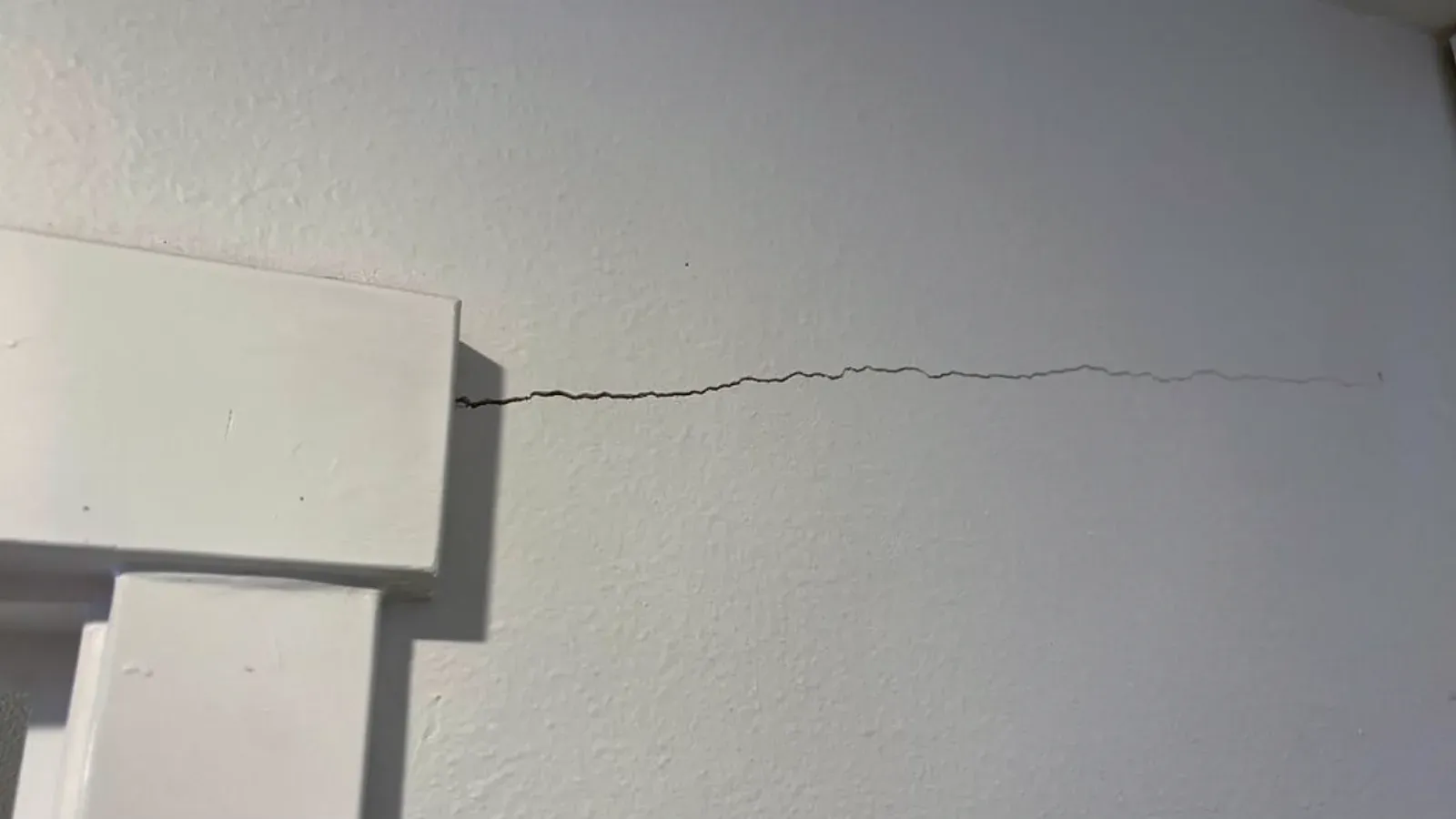
A thin horizontal stress crack running along a painted interior wall from the top corner of a white door casing

Drywall Crack Repair

A crack that opens back up in the same spot every year is not a finishing problem, it is a movement problem, and that is the difference between a repair that holds and one that fails. Compound has no strength of its own, so pushing it into a moving joint and painting over it guarantees the crack returns the next time the wall shifts. Lowell Quality Drywall & Plaster reads the crack first, because the line on the wall tells you what is moving underneath it. Lowell's triple-deckers and two-families, especially across The Highlands, have been settling for a century, and that produces a signature set of cracks: stress cracks angling out from the corners of doors and windows, long seams between sheets, and split lines over failed outside corner bead. Each has a different cause, and the repair is matched to the cause. Many homeowners notice a crack that opens in winter and closes in summer. That seasonal rhythm is New England's freeze-thaw climate flexing an old building twice a year, which is why a crack filled in July looks perfect until February. A repair built to survive that cycle bridges the joint with tape, builds compound up in feathered coats, and reinforces the joint so the surface no longer carries the strain alone. Where a crack follows a loose corner bead, the old bead is cut out and reset rather than skimmed over, and once the repair is flat the surrounding texture is matched and primed ready for paint.

Stop the recurring crack
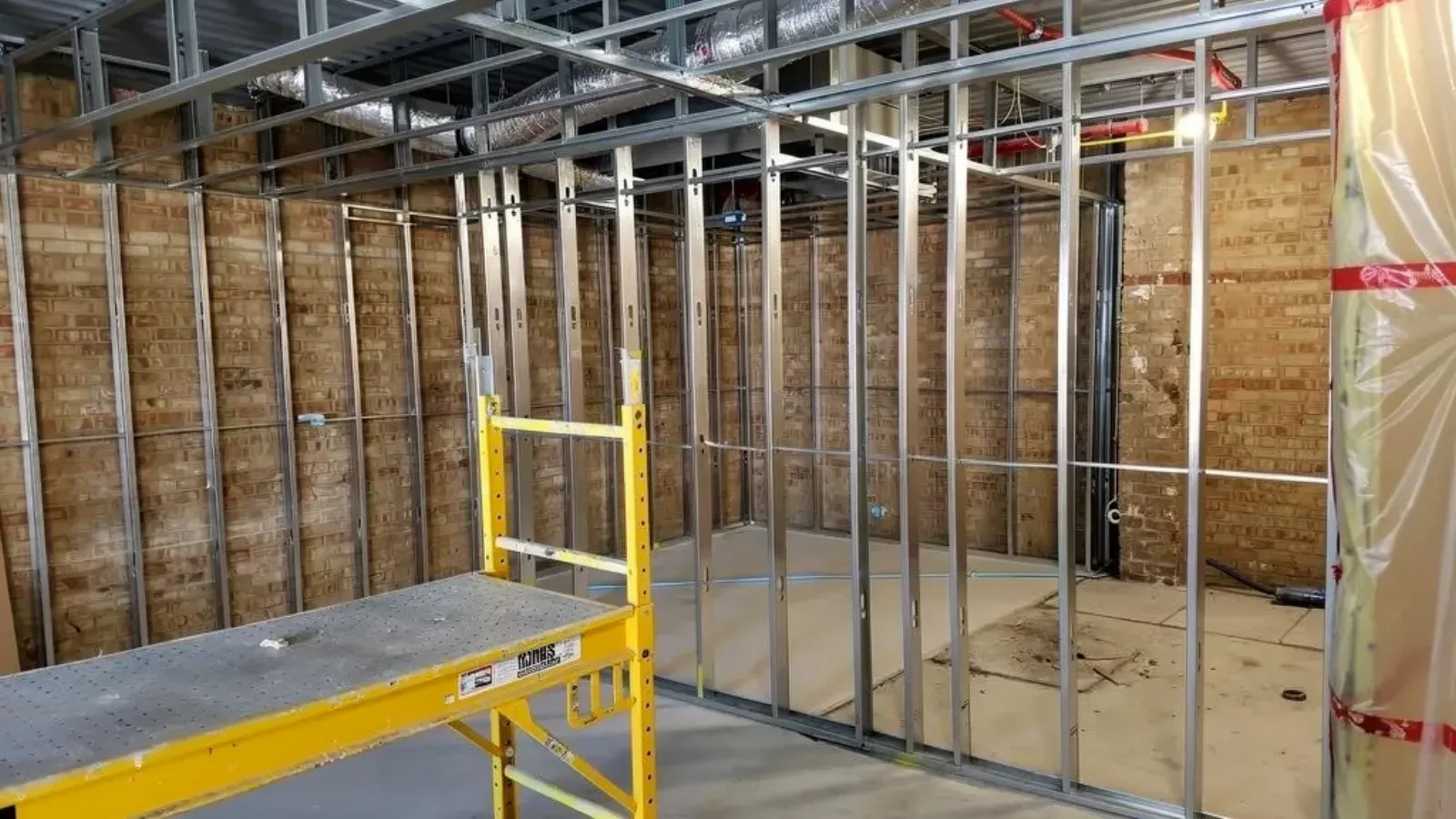
Steel stud partition walls framed inside an unfinished commercial interior, with overhead ceiling framing and ductwork

Metal Stud Framing & Commercial Drywall

Turning an open floor plate into offices, conference rooms, and leasable suites starts with the framing trade, and in commercial construction that framing is light-gauge steel, not wood. Lowell Quality Drywall & Plaster builds the interior partitions general contractors need for tenant fit-outs across downtown Lowell, the Merrimack and Middle Street office district, the reused Boott, Massachusetts, and Appleton mills, and the I-495 and Route 3 office parks. The work begins with the drawings. The crew reads the architectural partition plan and the structural notes that specify stud gauge, depth, and spacing, then snaps the lines on the slab and frames to exactly what the set calls out. Steel studs and track go up following ASTM C645 and ASTM C754, deflection track is detailed at full-height walls that run to the deck, and backing is set into the framing for doors, casework, and wall-hung equipment before anything is closed in. Dividing space is a large part of the job. Demising walls that separate one tenant suite from the next usually run full height, carry a fire and acoustic spec, and need their head-of-wall condition firestopped where they meet the structure above. The crew builds them to the drawings and leaves a clean separation between suites. Once framing passes and the mechanical, electrical, and plumbing trades have roughed in, the walls are boarded, taped, and finished to the level the drawings specify, Level 4 for standard paint or Level 5 where critical lighting or a high-end tenant demands a full skim. Lowell Quality Drywall & Plaster sequences framing and hanging so the trades that follow are never held up.

Bid your fit-out framing
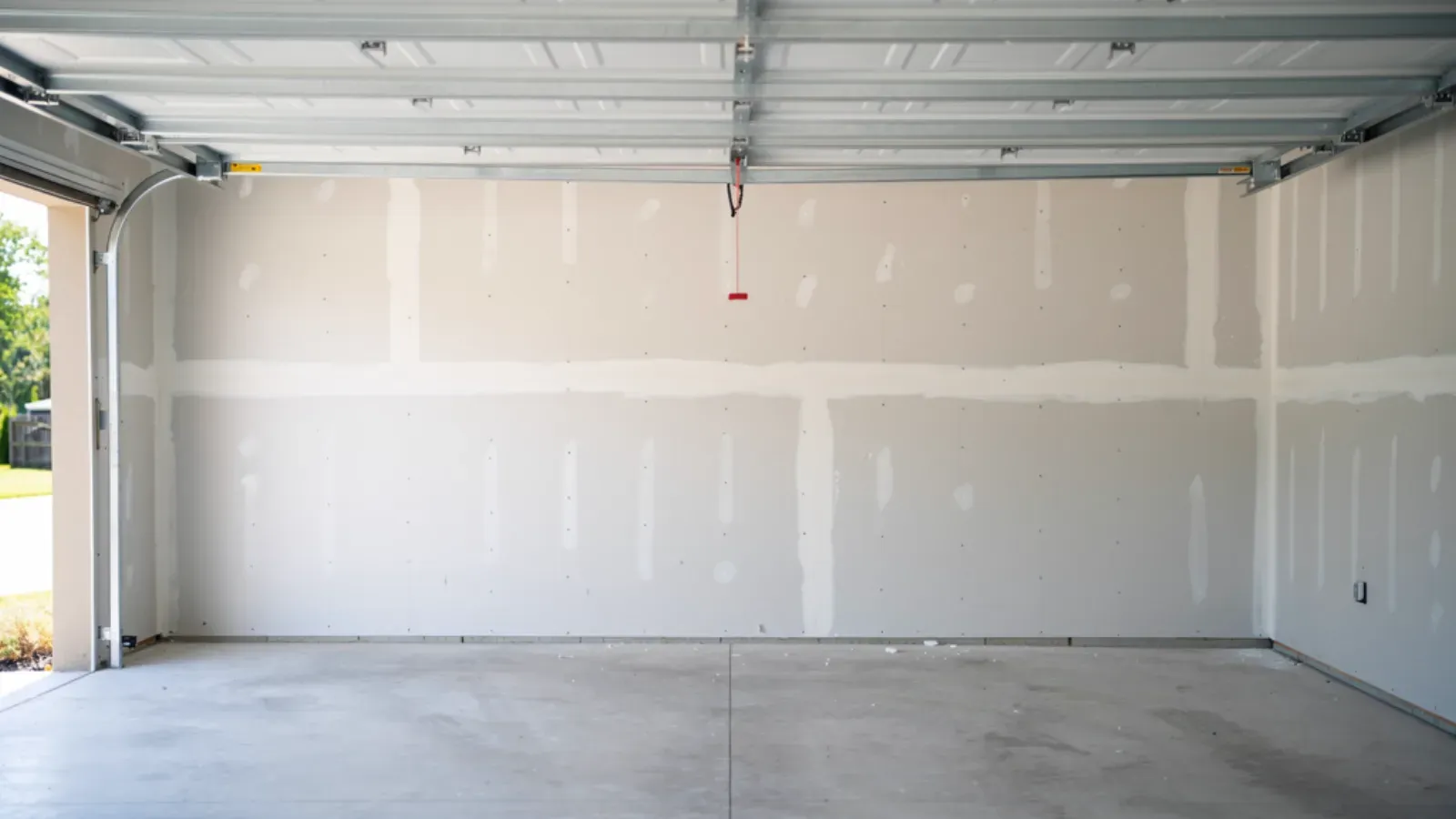
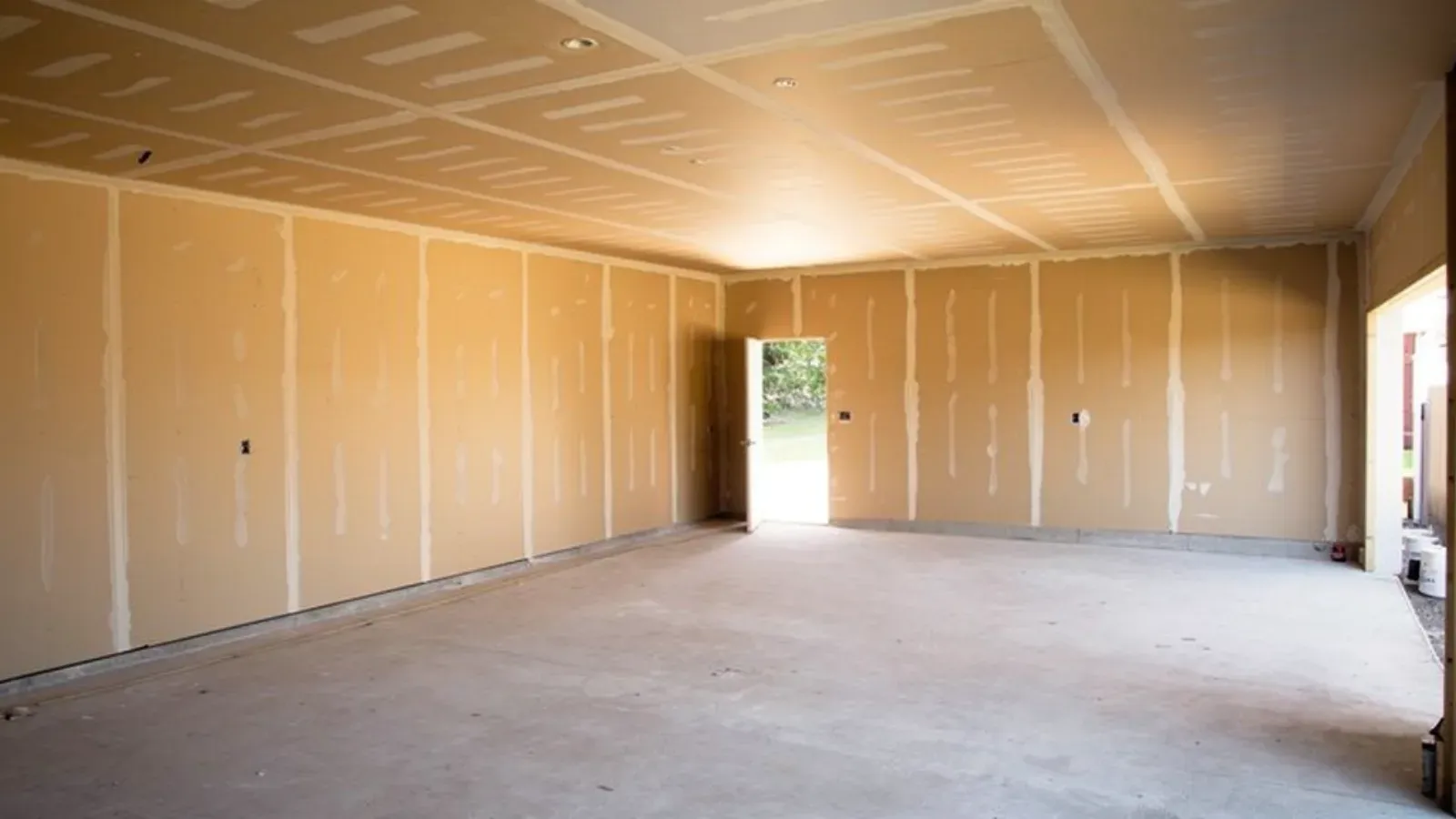
Residential garage interior with new bare gypsum drywall installed across the ceiling and shared house wall, concrete floor

Garage Drywall & Fire Separation

An attached garage sits right against the living space, where cars, fuel, and stored chemicals are, so the building code requires a fire separation between the garage and the dwelling. Lowell Quality Drywall & Plaster boards that assembly with ⅝″ Type X fire-rated drywall on the shared wall, and on the ceiling too where there's living space above the garage. Not all drywall is rated for this. Type X board has a reinforced gypsum core that resists fire far longer than standard board, and the ⅝″ thickness is what the Massachusetts State Building Code specifies for a garage-to-dwelling separation. Standard ½″ sheetrock doesn't carry the rating and can't substitute on the shared assembly, because the rating comes from the whole assembly installed correctly, not the board alone. A separation only works if it's continuous. The crew keeps seams tight, seals penetrations where wiring or pipes pass through, and details the board around the man-door between the garage and the house. Gaps at the top of the wall and missing board above a dropped ceiling are the exact deficiencies a home inspector writes up before a sale. Many of these calls in Lowell come tied to a real estate deal, where an inspector flagged the garage fire separation and it has to be corrected to close. Others are garage conversions and bonus rooms over the garage, which bring the whole assembly under the code for living space. Lowell Quality Drywall & Plaster handles the correction or the full build, and can finish the rest of the garage in standard board in the same visit.

Get garage drywall to code
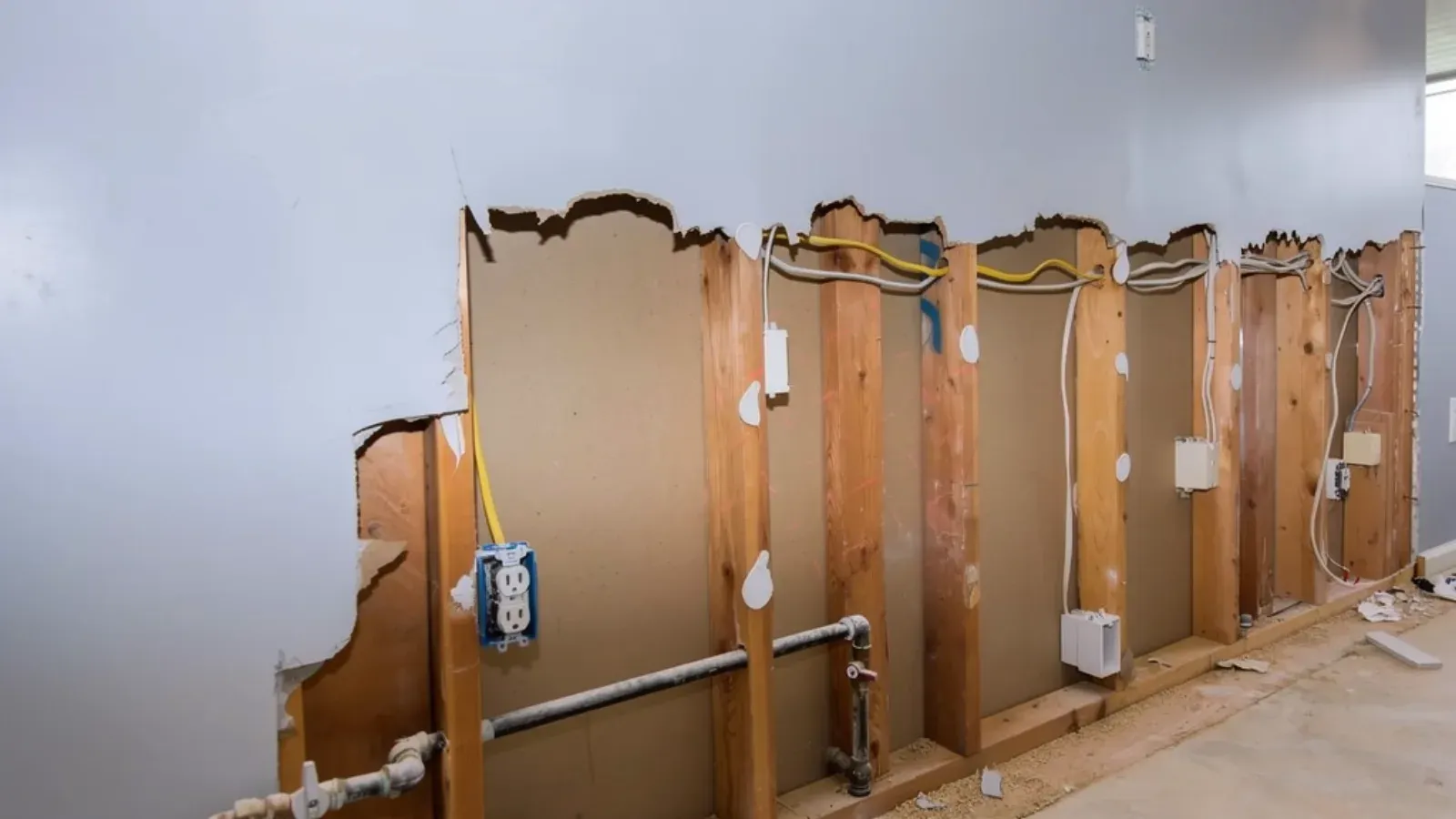
Interior wall opened along its lower half to expose bare wood studs with wiring and plumbing running inside the stud bays

Drywall Removal & Demolition

Tearing out a wall looks like the easy part of a renovation, which is exactly why it goes wrong. Lowell Quality Drywall & Plaster treats demolition as controlled removal, not destruction, because the dust through a whole home, the debris in a shared hallway, or a wire damaged on the way out is what costs a homeowner time and money long after the wall is down. Nearly all of Lowell's housing predates 1978, and that changes how old plaster comes out. Lath-and-plaster produces far more dust and heavier debris than screwed-on drywall, and in a home this old the paint and plaster can contain lead. So pre-1978 plaster is removed with dust containment and lead-safe work practice, sealing the area and controlling the dust rather than letting it travel, in line with EPA RRP requirements. Where very old material raises an asbestos question, testing comes before demolition. Much of the city is dense, shared housing: triple-deckers, two-families, and downtown mill-loft condos in the Boott, Massachusetts, and Appleton Mills. Demolition in a building like that means protecting the neighbors who share the walls and the front door, so the work area is sealed off and shared hallways are kept clean. Whether it is a single partition for a layout change, a full gut back to framing, or a fire- or water-damaged unit stripped for rebuild, the debris is hauled away and the space is broom-cleaned, left down to sound framing and ready for the next trade.

Plan your tear-out
Fire-rated drywall assembly taped across a garage ceiling and side walls

Fire-Rated Drywall Assembly

A fire rating is not a property of drywall; it is a property of a tested assembly. When a permit set calls out a 1-hour or 2-hour rated wall, it points to a specific UL design number, a full recipe of stud, board, layers, fasteners, insulation, and firestop tested to ASTM E119. Lowell Quality Drywall & Plaster builds rated assemblies to that exact listing, because the fire inspector on a certificate-of-occupancy walk checks the wall against its design number, not against how solid it looks. The board is the heart of the assembly. Type X gypsum is the standard fire-rated board and the backbone of most 1-hour partitions; Type C holds its core together longer and shows up in many 2-hour walls; shaft walls use a 1-inch shaftliner panel that lets the enclosure be built from one side. The crew installs whichever the design number specifies, in the exact layer count and fastener pattern the listing requires. Shaft walls come up constantly in Lowell's downtown mill conversions, where a new elevator or egress stair has to be threaded into the Boott, Massachusetts, or Appleton shells and closed off with a rated enclosure. And most rated walls fail inspection at the edges, not the field, so the crew firestops the head-of-wall joint and every pipe, duct, and conduit penetration to a listed detail that matches the wall's rating. Under the Massachusetts State Building Code (780 CMR) and the IBC, rated construction ties to the building's occupancy and life-safety plan. Lowell Quality Drywall & Plaster documents each assembly against its UL design number so the fire inspection clears the first time and the tenant's occupancy is not held up.

Bid your rated assemblies
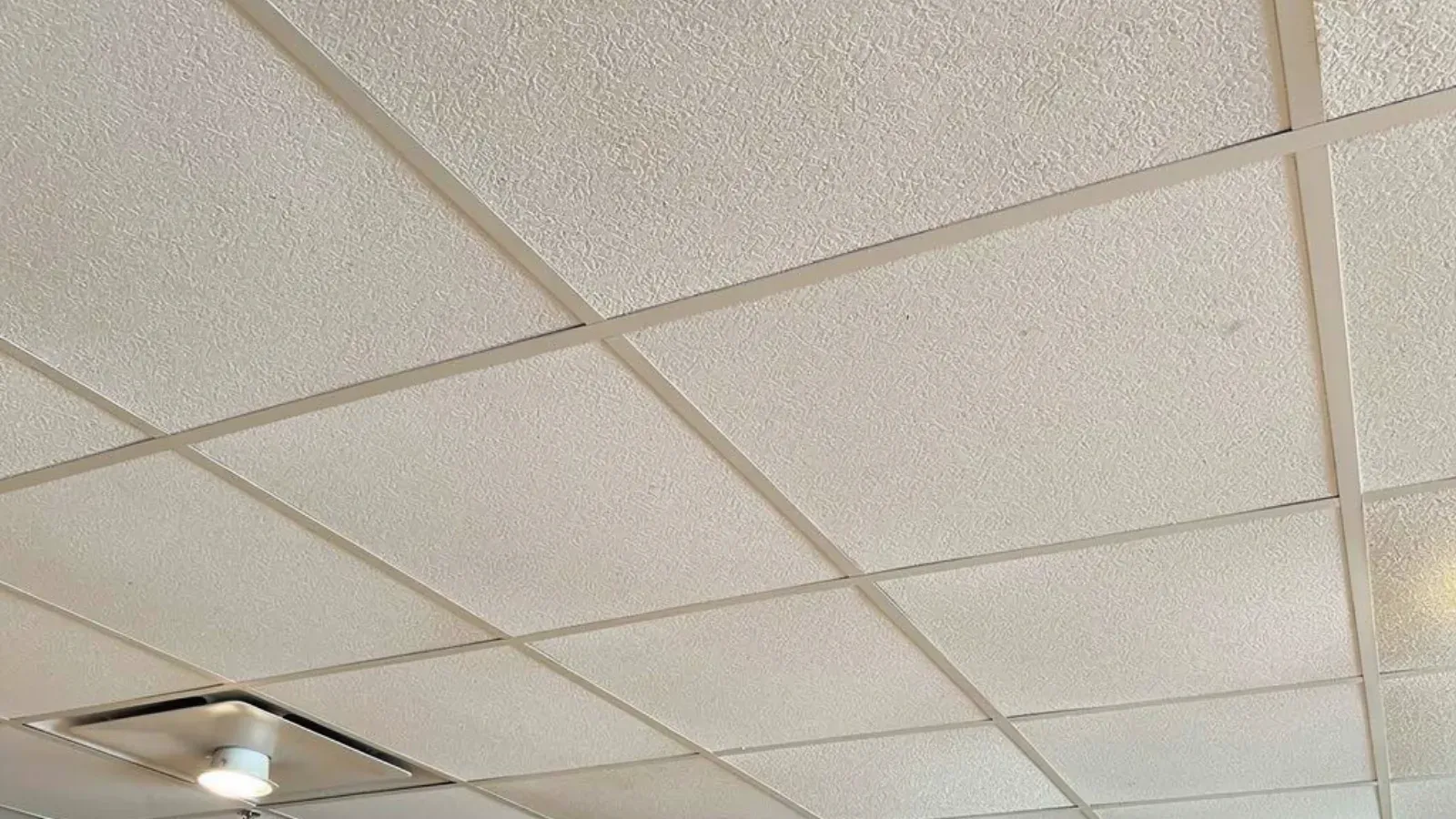
A fully tiled suspended ceiling with recessed lighting set into the grid

Suspended & Drop Ceiling Installation

A suspended ceiling has two parts, the metal grid hung from the structure and the acoustical ceiling tile that drops into it, and both are governed by the reflected ceiling plan. Lowell Quality Drywall & Plaster reads that plan, lays the grid out so the border tiles are balanced rather than left as a sliver against one wall, hangs the main tees and cross tees level on wire, and sets the tile with a clean, consistent reveal. Ceiling work in Lowell falls into three distinct scopes. New grid and tile on a tenant fit-out is full installation, hung from bare structure and coordinated with every trade. Tile-only replacement is the common ask from property managers with an occupied building, where the grid is sound but the tiles are water-marked or sagging and a swap refreshes the space between tenants. Grid repair and reconfiguration comes up on renovations that move partitions or relocate lights. The crew handles all three. A suspended ceiling has to get along with everything that penetrates it. Light fixtures, air diffusers, return grilles, and sprinkler heads all land where the reflected ceiling plan shows them, aligned to the grid, and that coordination happens during layout with the electrical and mechanical trades, not after. Lowell's downtown mill lofts, the Boott, the Massachusetts, the Appleton, have high open decks that call for a dropped grid on longer hanger wire, giving a finished acoustical ceiling and a plenum above it to route services. Where a lobby or corridor wants a smooth look, the crew builds a hard-lid drywall ceiling instead, and details the transitions so grid and hard lid read as one plane. Grid goes in late, near the certificate-of-occupancy finish line, so Lowell Quality Drywall & Plaster sequences it to keep occupancy on schedule.

Bid your ceiling scope

Get a fast, no-pressure quote

Call or send a few details — we serve Lowell and the surrounding area.

Call (978) 645-3305

Call Now