
Signs you need this
- • A room being gut-renovated where all the old walls and ceilings have to come out before anything new goes in
- • Old lath-and-plaster walls the owner wants gone so the space can be reframed, rewired, or reinsulated
- • Fire, smoke, or heavy water damage that has ruined the board throughout and left nothing worth patching
- • A layout change, taking down a wall or opening up a room, that starts with tearing out the existing drywall or plaster
- • A renovation that needs demolition done cleanly before the trades come in
- • A pre-1978 plaster tear-out where the dust and lead risk is more than a homeowner wants to handle alone
Demolition Is the Quiet Part of a Renovation That Goes Wrong Loudly
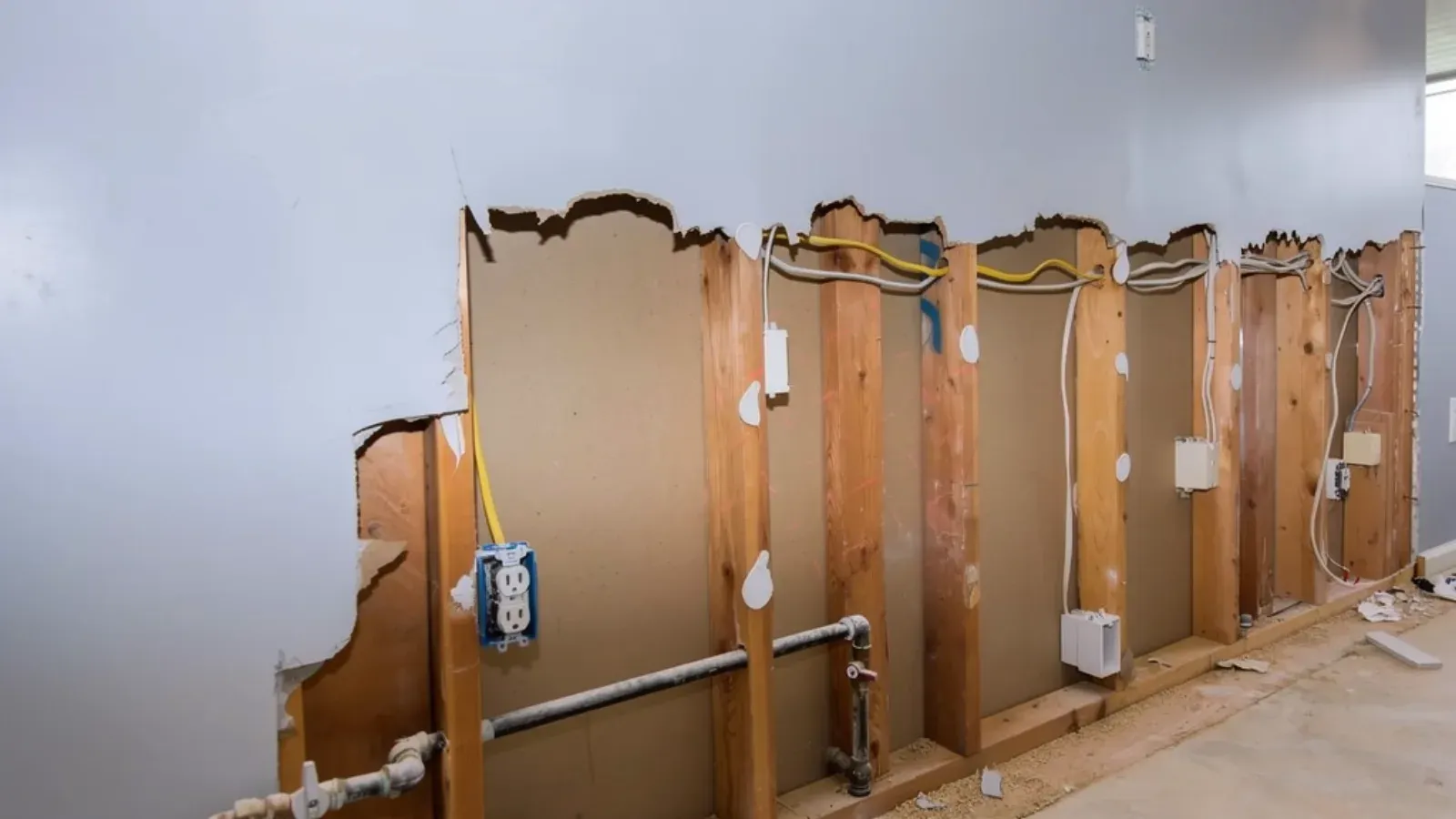
Tearing out a wall looks like the easy part of a project, and that is exactly why it goes wrong. Lowell Quality Drywall & Plaster treats demolition as controlled removal, not destruction, because the mess a tear-out makes, dust through the whole home, debris in shared hallways, a fixture or a wire damaged on the way out, is the part that costs a homeowner time and money long after the wall is down. A clean tear-out sets up everything that follows: the framing, the wiring, the insulation, and the new board all start faster when the demolition crew left the space down to sound framing and swept, rather than leaving a pile and a coat of dust for the next trade to deal with.
Plaster Removal in a Pre-1978 City
Nearly all of Lowell’s housing predates 1978, and that single fact changes how old plaster comes out. Lath-and-plaster walls were built by troweling wet plaster over thin wood lath, and taking them down produces far more dust and far heavier debris than pulling screwed-on drywall sheets. In a home this old, the paint and plaster can contain lead, which means an open-window-and-sledgehammer demolition does not just make a mess, it spreads a hazard. Lowell Quality Drywall & Plaster removes pre-1978 plaster with dust containment and lead-safe work practice, sealing the area and controlling the dust rather than letting it travel, in line with EPA RRP lead-safe requirements for older housing. Where very old material raises an asbestos question, testing comes before demolition, not after.
Containing the Work in an Occupied Triple-Decker
Much of Lowell is dense, shared housing: triple-deckers where three families live stacked over one another, two-families, and downtown mill-loft condos in the Boott, Massachusetts, and Appleton Mills. Demolition in a building like that is not just about the unit being worked on, it is about the neighbors who share the walls, the stairs, and the front door. The Acre, South Lowell, and Centralville are full of exactly these buildings. Lowell Quality Drywall & Plaster seals the work area off, keeps dust and debris inside it, and protects shared hallways and entries, so a tear-out inside one unit stays inside that unit. That containment is what lets a renovation happen in an occupied building without the rest of the residents living in someone else’s dust.
From Single Wall to Full Gut
Not every demolition is a gut. A layout change might mean taking out one partition to open a kitchen into a living room, which is contained to that single area with the rest of the room protected. A gut renovation strips a whole room or unit back to framing. A fire or heavy-water strip-out removes everything the damage ruined so the space can be rebuilt and, for a landlord, re-leased. Each scope is planned differently, and the cost tracks the surface type, the debris volume, and the containment the building needs, which is why the same square footage of clean drywall and lead-safe plaster in an occupied building are two different jobs. Fixtures are protected, power to the work zone is handled where needed, and wiring or plumbing in a wall coming out is worked around rather than torn through.
Haul-Off and a Space That Is Actually Ready
A demolition is not finished when the wall is down, it is finished when the debris is gone and the space is clean. Old plaster and lath are heavy, and disposal is a real part of the job, so Lowell Quality Drywall & Plaster bags or bins the debris, hauls it away, and broom-cleans the area, handling disposal responsibly under MassDEP rules for construction debris. What the owner is left with is a space down to sound framing, swept, and ready for the electrician, the plumber, the insulator, or the crew hanging new board. That handoff is the whole point of doing demolition well, so the project moves forward instead of stalling on a cleanup nobody planned for.
Materials & standards
Products & materials we use
- USG Sheetrock
- National Gypsum Gold Bond
- standard gypsum board
Standards & codes we work to
- Massachusetts State Building Code (780 CMR)
- EPA RRP (pre-1978 lead-safe)
- MA Dept. of Labor Standards (asbestos)
- MassDEP
- MA Construction Supervisor License (CSL)
- MA Home Improvement Contractor (HIC) registration
What the terms mean
- lath and plaster removal
- dust containment
- lead-safe work practice
- interior demolition
- strip-out to framing
- debris haul-off
- occupied-building work
Options & variants
| Option | When it applies | Cost |
|---|---|---|
| Single-wall or partition removal | A layout change or opening up a room | Lower, contained to one area |
| Full-room drywall tear-out | Gut renovation of a room or unit in drywall | Moderate, driven by area and debris volume |
| Lath-and-plaster removal | Old plaster walls or ceilings coming out | Higher, heavier debris and lead-safe containment |
| Damage strip-out | Fire or heavy water damage back to framing | Moderate to higher, depending on extent |
| Occupied-building demolition | Tear-out in a lived-in triple-decker or condo | Adds containment and clean-up to protect shared space |
What affects cost
- • Whether the surface is drywall or lath and plaster, since plaster is far heavier, dustier, and slower to remove and haul
- • The age of the building, because pre-1978 plaster and paint may require lead-safe containment that adds setup and clean-up
- • How much material is coming out and the volume of debris to be hauled, since disposal is a real part of a demolition job
- • Access and whether the building is occupied, since a tear-out in a lived-in triple-decker needs containment to protect neighbors and shared hallways
- • Whether wiring, plumbing, or insulation in the wall has to be worked around or protected during the tear-out
What to expect
- 1
Scope and plan
The space is looked at to confirm what is coming out, whether it is drywall or plaster, and how the work area will be sealed off from the rest of the building.
- 2
Protect and contain
Floors, openings, and shared hallways are covered and sealed, and for pre-1978 plaster the area is set up for lead-safe, dust-controlled removal.
- 3
Shut-offs and care
Fixtures and, where needed, power to the work area are handled so demolition does not damage what stays.
- 4
Controlled tear-out
Drywall or lath and plaster is removed in a contained way, keeping dust and debris inside the work zone rather than through the building.
- 5
Haul and clean
Debris is bagged or binned and hauled away, and the space is broom-cleaned so the next trade can start.
- 6
Ready for rebuild
The area is left down to sound framing, cleaned up, and ready for framing, wiring, insulation, or new board.
When this isn’t the right call
- If only a hole, dent, or small damaged spot needs fixing rather than a full tear-out, drywall repair and patching is the better fit.
- If the plaster is worth saving and the owner wants it repaired or converted rather than demolished, plaster repair and plaster-to-drywall conversion is the better fit.
- If the walls are being torn out mainly because of a leak and the real need is the rebuild after, water damage drywall repair is the better fit.
Frequently asked questions
My house is from the early 1900s. Is the old plaster dust dangerous to remove? +
It can be, because nearly all Lowell housing predates 1978 and older plaster and paint can contain lead. Lowell Quality Drywall & Plaster removes pre-1978 plaster with dust containment and lead-safe practice rather than tearing it open in a cloud, which is the safe way to handle it in a home or an occupied building.
Can you take out just one wall for a layout change? +
Yes. A single-wall or partition removal is contained to that one area, with the rest of the room protected, so the space is opened up cleanly without turning the whole home into a demolition site.
I live in a downtown mill-loft condo. Can demolition be done without disturbing my neighbors? +
Yes, and that is the point of containment. In a shared building like the Boott or Massachusetts Mills, the work area is sealed off, dust is kept inside it, and shared hallways are protected, so a tear-out inside one unit does not spread through the building.
Do you haul away the debris, or do I have to deal with it? +
Debris is bagged or binned and hauled away as part of the job, and the space is broom-cleaned when the tear-out is done. Disposal of old plaster and board is a real part of demolition, so it is handled rather than left for the owner.
What's the difference between removing drywall and removing plaster? +
Plaster is much heavier, dustier, and slower to take out than drywall, because it is troweled over wood lath rather than screwed on in sheets, and in older homes it carries the added lead-safe requirement. That is why plaster removal is a larger job than a drywall tear-out of the same size.
Will the space be ready for the next trade when you're done? +
Yes. The area is left down to sound framing, cleaned up, and ready for framing, wiring, insulation, or new board, so the electrician, plumber, or the hanging crew can start without redoing the cleanup.