
Signs you need this
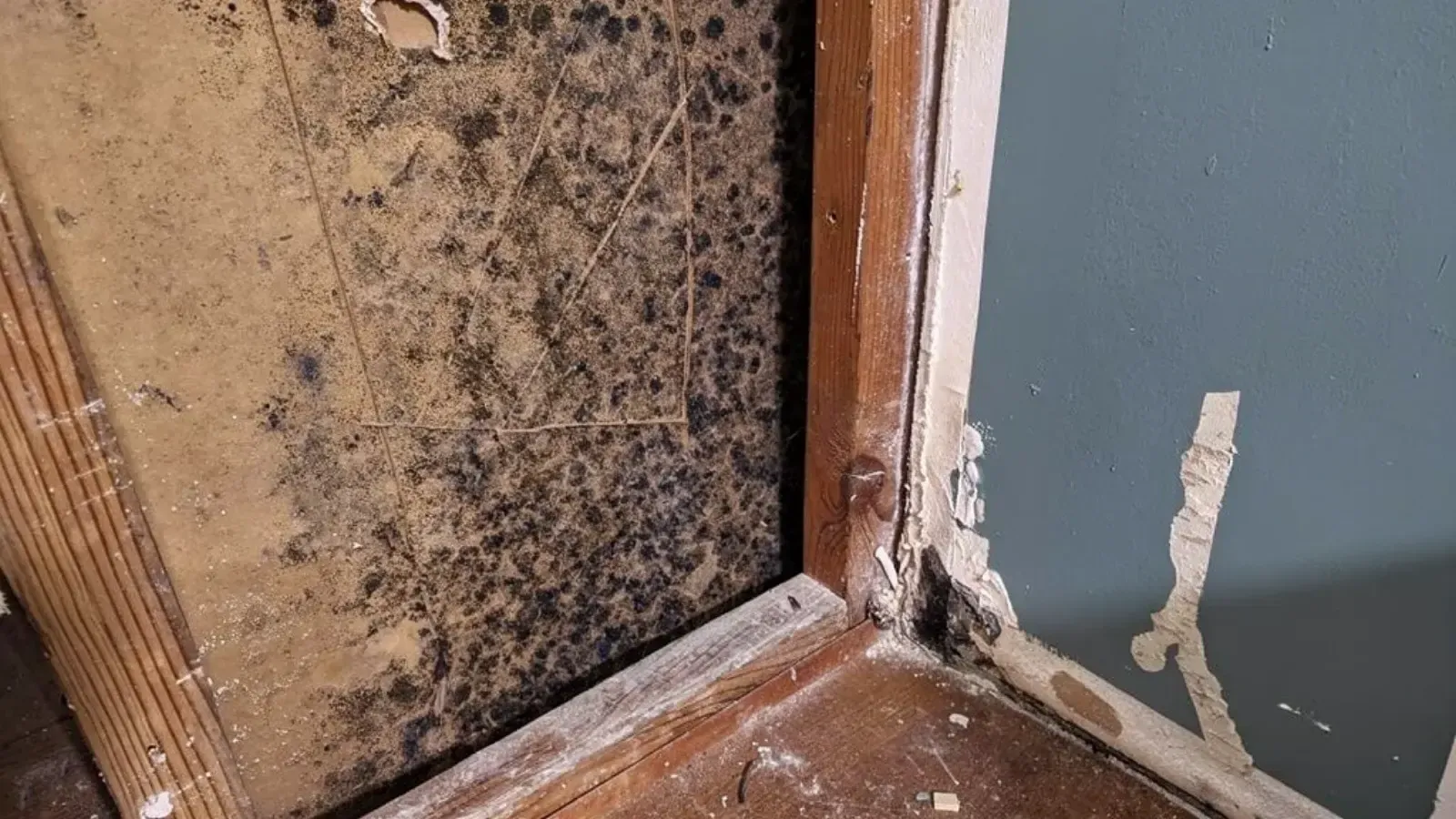
- • Dark speckled patches, greenish or black, spreading across a basement wall or the lower section of drywall near a foundation
- • A persistent musty, earthy smell in a basement or ground-floor room that doesn't go away with cleaning or a dehumidifier
- • Discoloration that keeps returning after being wiped or painted over, a sign it's growing behind the surface, not just on it
- • Family members or tenants reporting congestion, coughing, or allergy-like symptoms that seem tied to time spent in a specific room
- • A homeowner near the Merrimack or Concord River, or one of Lowell's low-lying canal-adjacent blocks, finds mold after seasonal flooding or a wet spring
- • A landlord gets a tenant complaint about smell or visible mold in a basement unit or ground-floor apartment and needs it addressed for habitability
- • A home inspection ahead of a sale or purchase flags mold or moisture staining in a basement wall
Why Lowell’s Geography Makes Basement Mold a Recurring Call
Lowell sits on the Merrimack and Concord Rivers with a historic power-canal network running through the city’s low-lying blocks, and that geography shows up directly in basement moisture patterns. Homes and multi-unit buildings closest to the rivers and canals see periodic flood exposure, and even properties farther out deal with high water tables and aging foundation drainage that lets moisture wick into basement walls year-round. Once drywall in a basement stays damp long enough, mold isn’t a maybe, it’s close to inevitable, and it tends to show up first as a faint discoloration near the floor line before spreading up the wall.
The Difference Between a Cleanup Job and a Remediation Job
Not every moldy wall needs a full remediation crew, and not every moldy wall is safe for a straight drywall swap either. Lowell Quality Drywall & Plaster draws that line based on scope: a small, contained patch tied to a known and resolved moisture event, a window leak that got fixed months ago, say, can usually be cut out and rebuilt directly. Mold that’s spread across a larger wall section, that’s recurring despite past cleaning attempts, or that’s affecting a household with young kids, older residents, or anyone with respiratory sensitivity, calls for a licensed remediation specialist to handle containment and air quality first, consistent with MassDEP guidance, before any new board goes up. Skipping that step to save time just means closing a wall over spores that are still airborne.
Rental Housing and the Reporting Gap
Over 60 percent of Lowell residents rent, and the city’s dense triple-decker stock means basement and ground-floor units are common, exactly the units most exposed to chronic moisture. Mold in a rental often goes unreported for months, either because a tenant doesn’t know who to flag it to or because it’s dismissed as a smell problem rather than a health one. Lowell Quality Drywall & Plaster works directly with landlords and property managers across the city’s rental housing, including in neighborhoods with large immigrant communities such as Lowell’s Cambodian-American and Brazilian and Latino populations, where language or unfamiliarity with local tenant processes can make it harder to get a landlord to act. A documented, professional repair closes that gap.
Getting to a Clean Substrate, Not Just a Clean-Looking Wall
Removing moldy drywall means cutting back until the framing and any remaining material is visibly clean and confirmed dry, not stopping at the edge of visible discoloration. Mold can travel along a stud bay or behind insulation further than it shows on the drywall face. Lowell Quality Drywall & Plaster checks the cavity before closing it back up, because a rebuild over a substrate that still holds moisture just buys a few months before the same call comes back in.
Mold-Resistant Board as the Long-Term Fix, Not Just the Rebuild
For basement walls and any space with a standing moisture risk, mold-resistant board (purple board, M2Tech-type facing) replaces standard paper-faced Sheetrock or Gold Bond as the default. It costs modestly more up front but resists the moisture that standard board wicks and holds, which matters most in exactly the flood-adjacent and high-water-table conditions common across Lowell’s river and canal-side neighborhoods. Where a foundation or drainage issue is the real root cause, that gets flagged too. A mold-resistant rebuild helps, but it isn’t a substitute for fixing standing water at its source.
Materials & standards
Products & materials we use
- USG Sheetrock
- National Gypsum Gold Bond
- mold-resistant board (M2Tech)
- Durock/cement board
Standards & codes we work to
- Massachusetts State Building Code (780 CMR)
- MassDEP
- ASTM C1396
- MA Construction Supervisor License (CSL)
- MA Home Improvement Contractor (HIC) registration
- MA Dept. of Labor Standards (asbestos)
What the terms mean
- mold-resistant board
- moisture metering
- ICRA containment
- joint compound
- mud and tape
- vapor barrier
- basement wall assembly
Options & variants
| Option | When it applies | Cost |
|---|---|---|
| Contained spot removal | Small, surface-level patch tied to a known, resolved moisture source | Lower cost, single visit |
| Full wall section replacement | Mold has spread along a wall or into a larger area than the visible patch | Moderate, driven by square footage |
| Mold-resistant board rebuild | Basement, or any space with ongoing dampness risk | Slightly higher material cost, better long-term outcome |
| Post-remediation rebuild | Job follows a licensed remediation company's containment and cleanup | Scoped around remediation clearance, drywall work only |
What affects cost
- • Whether the mold is a small, contained patch or has spread through a larger wall section, which only becomes clear once the board is opened
- • Whether a licensed remediation specialist needs to be involved first, versus a straightforward removal and rebuild Lowell Quality Drywall & Plaster can handle directly
- • Basement conditions: unfinished concrete versus a finished basement wall assembly with insulation that also needs replacing
- • Standard drywall versus mold-resistant board, and whether a vapor barrier or foundation moisture issue needs to be addressed for the fix to actually last
- • Access and containment needs to keep spores from spreading to the rest of the home during removal
What to expect
- 1
Initial call and description
What's visible, where, and whether there's a known moisture source (recent flooding, ongoing seepage, a past leak).
- 2
On-site assessment
Checking the extent of visible growth and whether it appears contained or likely to extend further into the wall.
- 3
Remediation referral if needed
For larger or health-sensitive situations, a licensed remediation specialist handles containment and cleanup first, per MassDEP guidance.
- 4
Careful removal
Moldy drywall is cut out and bagged for disposal, working back to a clean, dry substrate, not just past the visible stain.
- 5
Dry confirmation
The area is checked and confirmed dry before any new material goes up, so the rebuild doesn't trap a moisture problem back inside the wall.
- 6
Rebuild with mold-resistant board
New board is hung, taped, and finished to match the surrounding wall, with mold-resistant material used in ongoing-risk areas like basements.
When this isn’t the right call
- If the discoloration is a fresh water stain with no visible growth, from an active or recent leak, water damage drywall repair is the better fit.
- If the damage is age-related plaster cracking or crumbling with no moisture or mold involved, plaster repair and plaster-to-drywall conversion is the better fit.
- If mold has spread extensively through HVAC ductwork, insulation, or a large finished basement, that scope calls for a licensed remediation company's containment work before any drywall replacement begins.
Frequently asked questions
Is it safe for you to just remove the moldy drywall, or do I need a remediation company first? +
It depends on scope. A small, contained patch, Lowell Quality Drywall & Plaster can typically handle directly. Larger or recurring mold, or mold affecting a household with health sensitivities, generally calls for a licensed remediation specialist to handle containment and air quality first, with the drywall rebuild following once the area is cleared, consistent with MassDEP guidance.
My basement floods sometimes because I'm near the river. Will mold just come back? +
Not if the moisture source is addressed alongside the drywall work. Mold-resistant board reduces the odds of a repeat problem, but if the basement is a known flood-exposure area near the Merrimack, Concord, or the canal network, pairing the rebuild with a dehumidifier or sump pump is worth discussing.
How do I know if it's actually mold or just a stain? +
Mold typically has texture, a fuzzy or speckled look, and a persistent musty smell that returns after cleaning. A flat discoloration with no smell is more likely a plain water stain. When it's unclear, Lowell Quality Drywall & Plaster can assess on-site.
I'm a tenant and my landlord isn't addressing mold in my apartment. What should I do? +
Document it with photos and notify your landlord or property manager in writing. Mold affecting a habitable space is typically their responsibility to address; Lowell Quality Drywall & Plaster works with landlords and property managers across Lowell's rental housing on exactly this kind of repair.
Will you use mold-resistant board even in a basement that isn't currently damp? +
For basements and other spaces with a real moisture risk, yes, it's a modest upcharge that reduces the odds of a repeat problem down the line.
How long does mold drywall replacement take? +
A contained spot removal and rebuild can often be done in a day or two. Jobs requiring remediation referral first take longer, since the remediation and clearance process happens before the drywall rebuild begins.
A home inspector flagged mold before I buy my house. Can you fix it before closing? +
Often, yes, depending on timeline and scope. Lowell Quality Drywall & Plaster can typically assess quickly and give a realistic sense of whether the scope fits before a closing date.