
Signs you need this
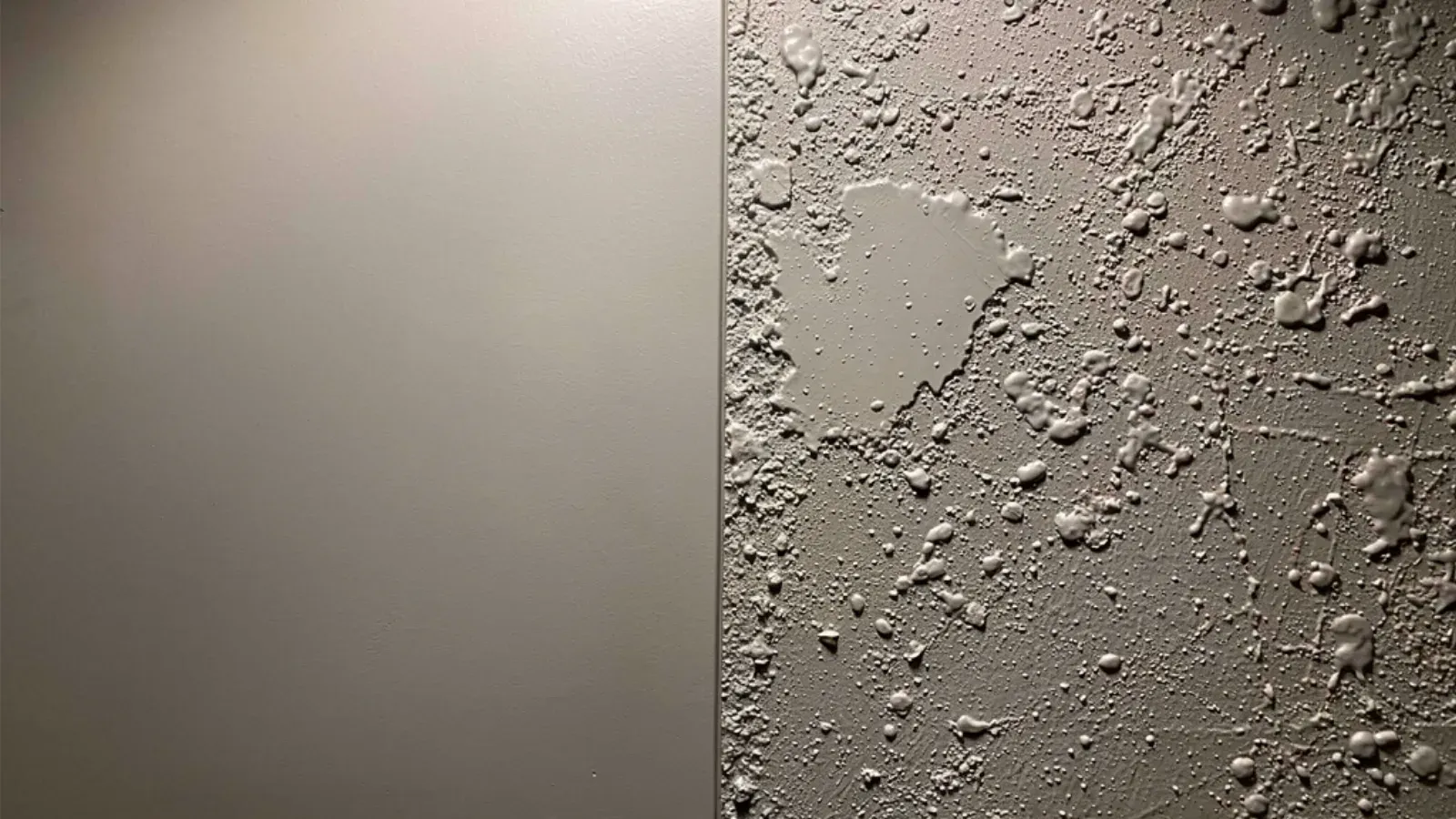
- • A patch that got repaired and painted but still jumps out because the surface around it is textured and the patch is dead smooth
- • A ceiling or wall with a knockdown or orange-peel spray, where a repair, a new light fixture, or a removed wall left a flat spot that breaks the pattern
- • A repair from a past contractor that used a rattle-can texture, and the fake texture doesn't match the grain, spacing, or flatness of the original
- • A rental unit being turned over where a dozen small patches from nail holes and door dings each read as a slightly different surface than the wall around them
- • A homeowner who patched a hole themselves, painted it, and realized the smooth patch is more obvious after paint than the hole ever was
- • A remodel that removed a wall or relocated a fixture, leaving a flat scar across an otherwise textured ceiling that has to be blended before painting
Making a Repair Disappear Into the Texture Around It
A repair is only finished when you can’t find it. On a smooth wall that’s a matter of a clean skim, but most of Lowell’s walls and ceilings aren’t smooth: they carry a sprayed knockdown or a fine orange-peel stipple, and a repair that’s patched flat and painted stands out worse than the hole did. Lowell Quality Drywall & Plaster matches the texture that’s already there, reading the grain, the spacing, and the flatness of the surrounding pattern and reproducing it across the repair with the same tools and the same compound consistency the original was made with. This is matching, not resurfacing. The goal isn’t a smooth wall, it’s a wall where the eye can’t find where the old surface ended and the new one began.
Why a Smooth Patch Looks Worse After Paint
Homeowners are often surprised that their own repair looked fine until they painted it, then jumped out. Paint unifies color but exaggerates surface. A dead-flat patch sitting inside a textured wall reflects light differently than the stipple around it, so a fresh coat of paint, which makes the color uniform, actually sharpens the contrast in surface. Adding another coat doesn’t help. The only real fix is to reproduce the surrounding texture across the patch before the paint goes on, so the whole plane catches light the same way. That is the difference between a repair a landlord’s next tenant never notices and one that draws the eye the moment they walk in.
Knockdown, Orange Peel, and Reading the Pattern
The two textures Lowell Quality Drywall & Plaster matches most are knockdown and orange peel. Orange peel is a fine, even stipple sprayed onto the surface, common on walls. Knockdown is heavier: sprayed on as a splatter, then flattened with a knife while it’s still wet, which leaves the broader mottled pattern most people picture on a textured ceiling. Each takes different tools and, in the case of knockdown, precise timing, since flatten it too early and it smears, too late and it won’t lay down. The crew reads which texture is on the surface and how heavy it is, then dials the match in on a test board or an out-of-sight area before touching the actual repair, adjusting compound consistency and pressure until the test reads like the wall.
The Rental Turnover Case
More than 60 percent of Lowell’s residents rent, and turnover work is a steady part of the city’s drywall demand. A unit coming empty in Pawtucketville, the Highlands, or the Acre often has a dozen small patches: nail holes from the last tenant’s pictures, door-handle dings, a patched anchor from a mounted TV. Each one, patched flat, reads as a slightly different surface than the textured wall around it. Lowell Quality Drywall & Plaster blends all of them into the existing texture in one visit so the walls read as one clean, continuous surface for the next tenant, which is exactly what a property manager needs to turn a unit fast and show it well.
Why Real Compound Beats a Can
A spray-can texture from the hardware store is the most common reason a past repair still shows. Canned texture rarely matches the grain or spacing of the original, and because it’s a different material than the surrounding joint compound, it can sit differently on the wall and flash under paint, catching light in a way the real texture doesn’t. Lowell Quality Drywall & Plaster matches with the same joint compound the original texture used, applied the same way, so the repair wears, takes paint, and reflects light identically to the surface around it. That’s what makes a matched texture hold up instead of reappearing the first time the light hits it right.
Materials & standards
Products & materials we use
- USG Sheetrock
- National Gypsum Gold Bond
- joint compound
- FibaTape
Standards & codes we work to
- GA-214 finish levels
- ASTM C1396
- MA Construction Supervisor License (CSL)
- MA Home Improvement Contractor (HIC) registration
What the terms mean
- knockdown texture
- orange-peel texture
- texture matching
- stipple
- joint compound
- feathering
- spray texture
- mud and tape
- rental turnover
- blend patch
Options & variants
| Option | When it applies | Cost |
|---|---|---|
| Knockdown texture match | The wall or ceiling has a sprayed-then-flattened knockdown pattern that a repair broke | Driven by the patch size and how large the surrounding pattern is |
| Orange-peel texture match | A fine stippled spray finish, common on walls, that needs the same grain reproduced | Similar, depends on matching the stipple size |
| Ceiling texture repair | A flat spot on a textured ceiling from a fixture change, a leak repair, or a removed wall | Higher, since overhead spraying and blending is slower |
| Multi-patch rental blend | A turnover unit with many small dings and nail-hole patches to make disappear at once | Priced by the number and spread of patches, not one flat rate |
What affects cost
- • The size of the repair relative to the surrounding pattern: a small patch in a bold knockdown blends faster than a large flat area that has to feather out over a wide margin
- • Which texture is being matched, since a fine orange peel, a heavy knockdown, and a hand-troweled skim each take different tools and technique
- • Whether it's a wall or a ceiling, because overhead texture work is slower and messier to control
- • How many separate patches are being blended in one visit, which is the driver on a rental turnover
- • How well the existing texture was originally applied, since a wavy or irregular original is harder to match convincingly than a consistent one
What to expect
- 1
Read the existing texture
The crew studies the grain, spacing, and flatness of the surrounding pattern to identify exactly which texture and how heavy it is.
- 2
Prep the repair
The underlying patch is confirmed sound and finished flat, primed if needed, so the texture goes over a stable base.
- 3
Test-match off to the side
The texture is dialed in on a test board or an inconspicuous area, adjusting compound consistency and spray or trowel pressure until it reads like the original.
- 4
Apply and knock down
The matched texture is sprayed or troweled onto the repair and, for a knockdown, flattened at the same timing the original was, so the pattern reads identical.
- 5
Feather and prime
The new texture is feathered into the surrounding surface so there's no hard edge, then primed and left ready for a matching paint.
When this isn’t the right call
- If the goal is a fully smooth, modern flat wall rather than matching an existing texture, skim coat and Level 5 finish is the better fit.
- If the texture is a popcorn or acoustic ceiling the owner wants gone rather than matched, popcorn ceiling removal is the better fit.
- If the underlying wall is still damaged from a leak or crack and hasn't been repaired yet, that repair comes first, then the texture match blends it in.
Frequently asked questions
Can you really make a patch disappear into a textured ceiling? +
Yes. That's the whole point of texture matching. Lowell Quality Drywall & Plaster reads the existing knockdown or orange-peel pattern and reproduces it across the repair with the same tools and compound the original used, then feathers it in, so once it's primed and painted the eye can't find the patch.
Why did my last patch look worse after I painted it? +
Paint unifies color but exaggerates surface. A smooth patch inside a textured wall catches light differently than the texture around it, so fresh paint makes that difference more obvious, not less. The fix is to match the texture before painting, not to add another coat.
What's the difference between knockdown and orange peel? +
Orange peel is a fine, even stipple, like the skin of an orange, usually on walls. Knockdown is a heavier splatter that's sprayed on and then flattened with a knife while it's still wet, leaving broader mottled patches. They take different tools and timing, and Lowell Quality Drywall & Plaster matches whichever one is already on your surface.
Can you match texture on a rental turnover with a lot of small patches? +
Yes, and that's a common Lowell job. A turnover unit in Pawtucketville or the Highlands often has a dozen small dings and nail-hole patches. Blending them all into the existing texture in one visit makes the walls read as one clean surface for the next tenant.
Do you have to re-texture the whole wall or just the patch? +
Usually just the patch, feathered out into the surrounding texture so there's no hard edge. Re-texturing a whole wall is only necessary if the existing texture is too inconsistent to blend into or the owner wants a fresh, uniform look across the plane.
Will the match hold up over time? +
Yes. A properly matched texture is the same joint compound applied the same way as the original, so it wears and takes paint the same as the surface around it. A spray-can texture, by contrast, often sits differently and can flash under paint, which is why matching with real compound lasts.