
Signs you need this
- • A ceiling that has started to bow or belly downward in the middle of a room, sometimes with a visible dip you can see from the doorway
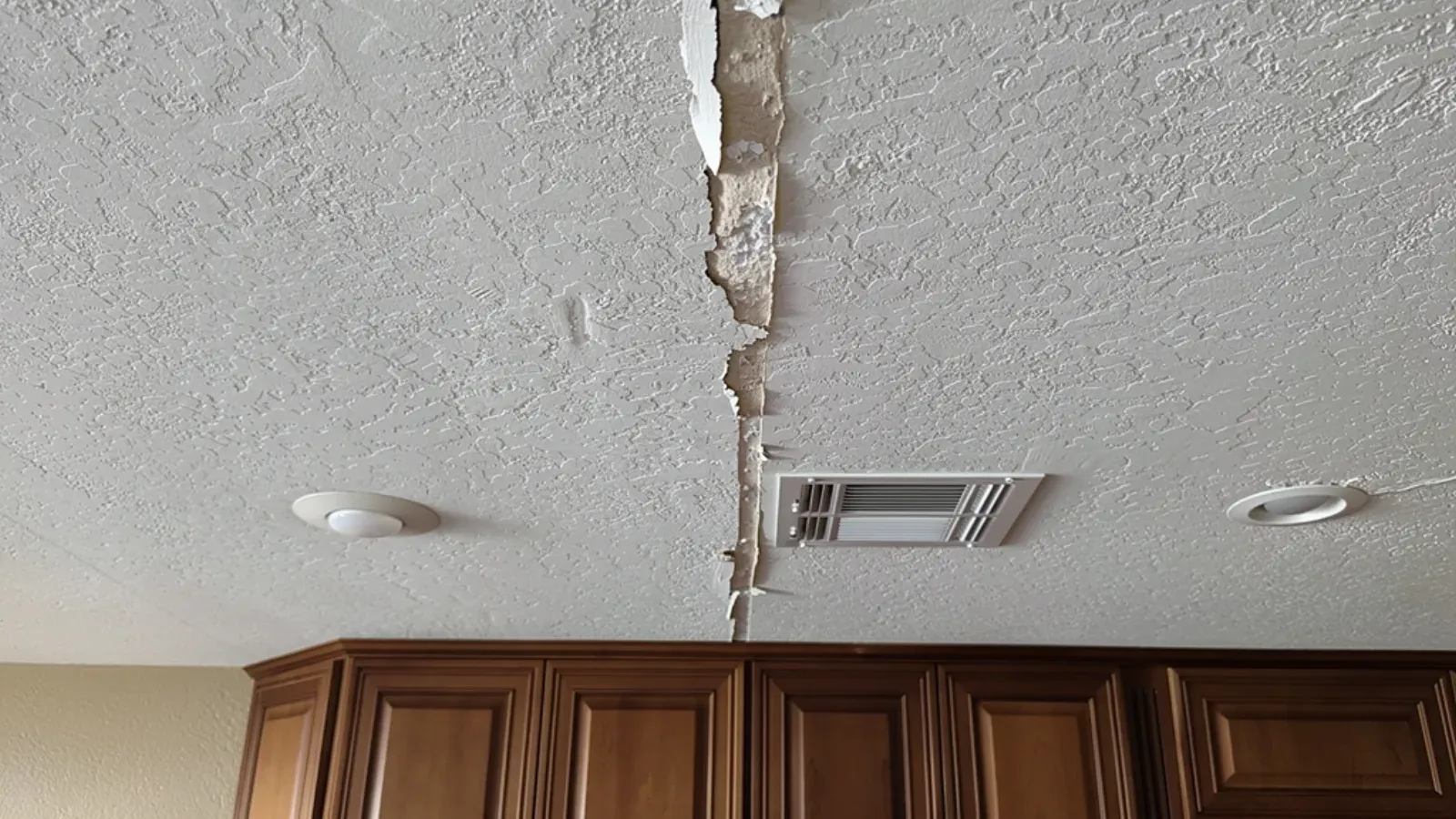
- • Hairline cracks running across a plaster ceiling, or a spider-web pattern spreading out from a light fixture
- • A section of ceiling that sounds hollow or drums when tapped, meaning the plaster has let go of the wood lath behind it
- • Chunks of plaster or paint flakes landing on the floor or furniture, and small holes where keys have already dropped out
- • A ceiling that dropped low enough over a bed or couch that the homeowner worries it could come down
- • A crack ignored for a year that suddenly widens after a hot, humid summer as pieces start falling
Why Ceilings Are the Hardest Surface in the House
A ceiling punishes shortcuts in a way a wall never does. Lowell Quality Drywall & Plaster treats overhead work as its own discipline because a ceiling is lit from the side by every window and every lamp in the room, and that raking light throws a shadow off any ridge, seam, or low spot. A wall patch can hide behind a picture and forgiving front light. A ceiling patch sits in the open under the worst possible lighting, so it has to be finished flatter and checked at an angle before it is ever primed. That is the difference between a repair that disappears and one the homeowner notices every evening when the lamps come on.
Plaster Ceilings Over Lath, and Why They Sag
Much of Lowell’s older housing carries original plaster ceilings, especially the Victorian and Colonial homes in Belvidere and the triple-deckers and mill-worker cottages spread through The Highlands and Centralville. These ceilings were built by troweling wet plaster over thin wood lath, and the plaster gripped the lath by squeezing through the gaps and forming keys behind it. After a hundred years of settling, heat, and humidity, those keys crumble, and the plaster slab loses its hold and begins to sag away from the wood. When a homeowner sees a ceiling belly downward or hears a hollow drum when it is tapped, that is failed keying, not a surface crack. In many cases the plaster is still solid and can be re-anchored back to the lath and saved, which keeps the original ceiling instead of tearing out a room’s worth of historic plaster. Where the plaster is too far gone, that section is cut back to sound framing and rebuilt in drywall.
Cracks: Which Ones Are Cosmetic and Which Ones Are Not
Not every ceiling crack means the same thing. A fine spider-web of hairline cracks across an old plaster ceiling is usually surface crazing, the plaster finish coat aging, and it re-skims cleanly. A straight crack that runs across the room or spreads out from a light fixture can be a stress crack, tied to the framing moving or a fixture pulling on the surface, and it needs to be bridged with tape and compound so it does not simply reopen through a coat of mud. Lowell Quality Drywall & Plaster reads the crack before filling it, because the fix for a moving crack is different from the fix for an aging finish, and filling a stress crack with nothing but compound guarantees a callback.
Matching the Finish Under Raking Light
Once the ceiling is sound again, the repair only works if the finish matches. Older Lowell ceilings run the full range: hand-troweled plaster skim in the historic homes, sprayed knockdown or orange-peel texture in mid-century and rental units, and flat, smooth drywall in the mill-loft conversions downtown and newer renovations. Lowell Quality Drywall & Plaster matches the existing texture and finish level, whether that means feathering a skim coat out to nothing, spraying and knocking down a texture to blend, or bringing a whole ceiling up to a smooth Level 5 finish when the owner wants uniformity under critical light. Standard drywall panels are USG Sheetrock, Gold Bond, or CertainTeed, taped and mudded with joint compound worked to a GA-214 finish level that suits the room.
Working Overhead in an Occupied Home
Ceiling work makes more mess than any other repair, because gravity is against you and dust falls straight down onto everything below. The crew covers floors and furniture before anything comes down, works clean, and plans access for the room it is in, since a high downtown loft ceiling or a stairwell landing needs proper staging rather than a homeowner’s ladder. All of it is done under the Massachusetts State Building Code (780 CMR), with the moisture-source question settled first, because there is no point finishing a ceiling smooth if the reason it failed is still dripping above it.
Materials & standards
Products & materials we use
- USG Sheetrock
- National Gypsum Gold Bond
- CertainTeed
- joint compound
Standards & codes we work to
- Massachusetts State Building Code (780 CMR)
- GA-214 finish levels
- ASTM C1396
- MA Construction Supervisor License (CSL)
- MA Home Improvement Contractor (HIC) registration
What the terms mean
- lath and plaster
- re-anchoring plaster to lath
- skim coat
- Level 5 finish
- knockdown and orange-peel texture matching
- mud and tape
- raking light
- overhead assembly
Options & variants
| Option | When it applies | Cost |
|---|---|---|
| Plaster ceiling re-anchoring | Old plaster has separated from wood lath but is otherwise intact | Moderate, labor-driven, saves the historic surface |
| Sagging section cut-and-replace | Plaster or drywall is failed beyond re-securing, or water has ruined a section | Moderate, driven by the area removed |
| Ceiling crack repair and re-skim | Hairline or stress cracks with a sound ceiling behind them | Lower cost, finish-focused |
| Full ceiling skim to Level 5 | Homeowner wants a uniformly smooth ceiling under critical light | Higher, whole-surface finish work |
| Texture match (knockdown, orange peel) | The rest of the ceiling carries a sprayed texture | Adds a matching step to any of the above |
What affects cost
- • Whether the ceiling is plaster over lath or drywall, since re-anchoring failed plaster is more labor than swapping a drywall panel
- • How much of the ceiling has to come down: a two-foot water patch is quick, a whole sagging room is a different scope
- • Ceiling height and access, since a downtown mill-loft ceiling or a stairwell ceiling needs staging that a standard eight-foot room does not
- • Whether the finish is a smooth skim that shows every imperfection under raking light or a forgiving sprayed texture
- • Whether the failure came with water damage or mold above the ceiling that has to be handled before the surface can be closed
What to expect
- 1
Look and listen
The ceiling is inspected and tapped to find where sound plaster ends and where it has let go of the lath or where drywall has softened.
- 2
Protect the room
Floors and furniture are covered, because ceiling work rains dust and debris more than any other repair.
- 3
Secure or remove
Sound plaster is re-anchored to the lath, failed plaster or drywall is cut back to solid framing, and anything wet or moldy above is flagged before it gets closed in.
- 4
Board and tape
New drywall goes up where a section was removed, seams are taped and mudded, and cracks are bridged so they do not reopen.
- 5
Finish to the light
The ceiling is skimmed smooth or the existing texture is matched, then checked under raking light before priming.
- 6
Prime and hand off
The repaired ceiling is primed and left ready for the room's finish paint.
When this isn’t the right call
- If the ceiling stain is from an active or recent leak, the water source and the wet cavity come first, so water damage drywall repair is the better fit.
- If there is visible black mold above the ceiling, not just a stain, mold drywall replacement is the better fit.
- If the whole ceiling is failing plaster and the owner wants to move to a modern drywall surface throughout, plaster repair and plaster-to-drywall conversion is the better fit.
Frequently asked questions
My plaster ceiling is sagging in the middle. Is it going to fall? +
A plaster ceiling that has separated from its lath and is visibly bowing can let go, and old plaster is heavy, so Lowell Quality Drywall & Plaster treats a sagging overhead section as a priority to inspect. In many cases the plaster can be re-anchored to the lath and saved rather than torn out entirely.
Can you fix a cracked ceiling without replacing the whole thing? +
Usually yes. If the ceiling behind a crack is still sound, the crack is bridged, taped, and re-skimmed so it does not telegraph back through, and only the cracked surface is refinished rather than the entire ceiling.
Why is a ceiling repair harder than a wall patch? +
A ceiling is lit from the side by every window and lamp, so raking light exposes any ridge or low spot that a wall would hide. Lowell Quality Drywall & Plaster finishes overhead repairs flatter and checks them under angled light before priming for exactly that reason.
My ceiling has a sprayed texture. Can you match it? +
Yes. Knockdown and orange-peel textures are matched to the surrounding ceiling so the repair blends in once it is painted, rather than leaving a smooth patch in a textured field.
The ceiling in my downtown loft is really high. Is that a problem? +
No, it just changes the setup. High mill-loft and stairwell ceilings need proper staging to reach and finish safely, which is planned into the job rather than rushed from a ladder.
Do you skim the whole ceiling or just the damaged spot? +
It depends on the ceiling. A contained repair only needs the damaged area finished and blended, but a ceiling with widespread crazing or an owner who wants a uniform smooth surface may be better served by a full skim to a Level 5 finish.