
Signs you need this
- • The same crack that was filled and painted last year has opened right back up in the exact same spot
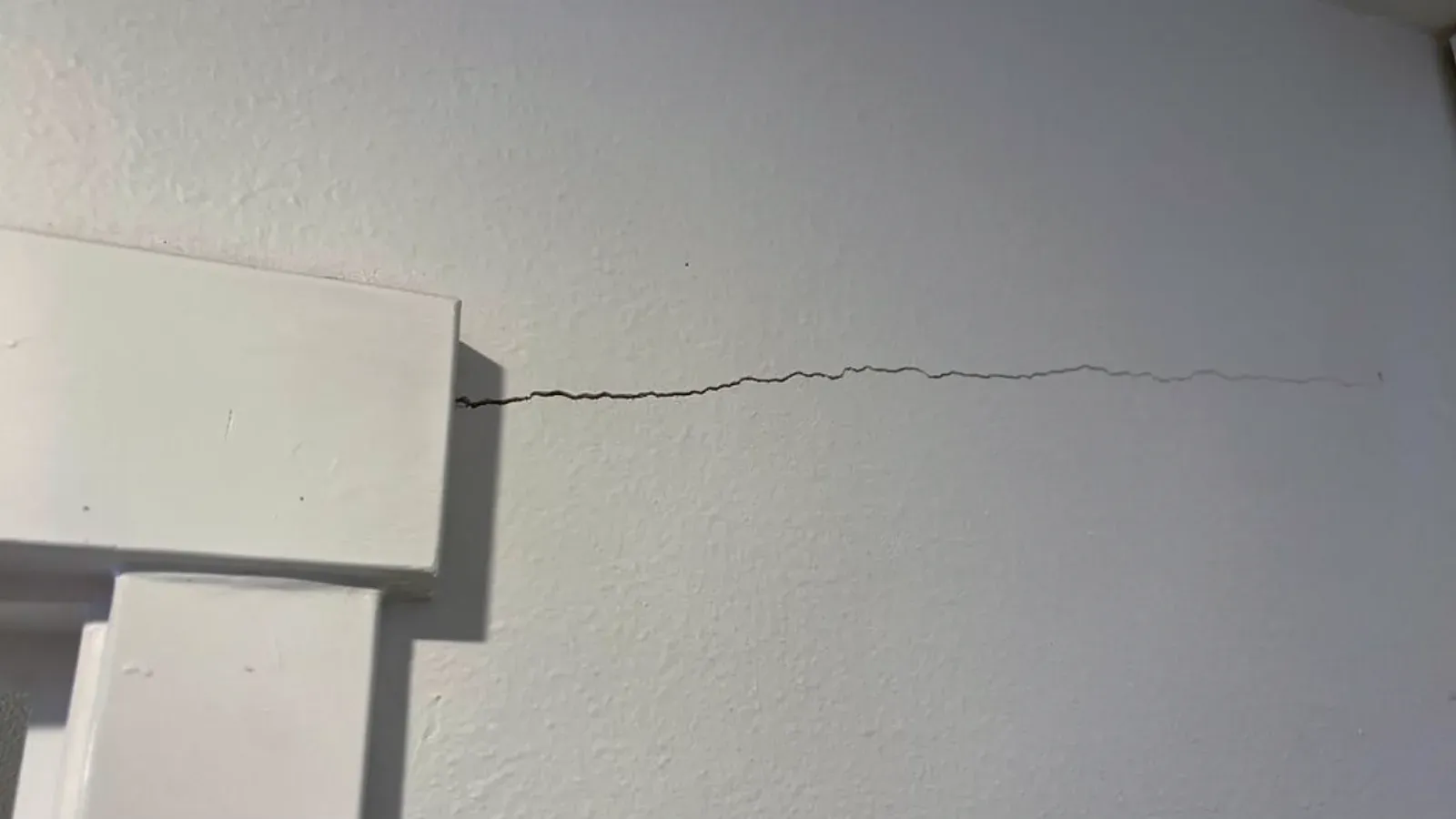
- • A crack running at an angle from the top corner of a door or window frame out toward the ceiling
- • A vertical line down an outside corner where the metal corner bead has cracked and the compound over it has popped loose
- • A crack that opens wider in winter and closes up in summer, moving with the seasons
- • A homeowner tired of patching the same crack over and over who wants it to actually stay closed
- • A crack grown long or wide enough that a coat of paint no longer hides it
Why a Crack Comes Back
A crack that reopens in the same spot every year is not a finishing problem, it is a movement problem, and that is the single fact that separates a repair that holds from one that fails. Lowell Quality Drywall & Plaster starts crack repair by reading the crack, because the line on the wall tells you what is moving underneath it. Compound has no tensile strength on its own. Push it into a moving joint, paint over it, and it will split again the first time the wall shifts, which is why so many homeowners have painted over the same crack three or four times. The fix is to bridge the movement, not to hide the line.
The Cracks You See in a Lowell Triple-Decker
Lowell’s housing is old, dense, and working-class, and The Highlands, the city’s largest neighborhood, is full of the triple-deckers and two-families that have been settling for a century. That long, slow settling produces a signature set of cracks. Stress cracks run at an angle from the top corners of doors and windows, because an opening interrupts the wall and concentrates any movement right at its corner. Long straight cracks follow the seams between drywall sheets or the lath boards behind old plaster. And on outside corners, a cracked line often means the metal corner bead underneath has come loose, so the compound riding on it has nothing solid to hold. Each of these has a different cause, and Lowell Quality Drywall & Plaster matches the repair to the cause rather than treating every crack as the same line of filler.
Freeze-Thaw, Humidity, and the Seasonal Crack
Homeowners often notice a crack that opens in winter and closes in summer, and that seasonal rhythm is New England’s freeze-thaw climate working on an old building. Cold, dry winter air shrinks framing and finishes, humid summer air swells them, and a wall that has already found a weak line will flex along it twice a year. This is why a crack filled in July looks perfect until February. A repair that is going to survive that cycle has to be built to move with the wall: proper tape to bridge the joint, compound built up in coats rather than troweled on thick in one heavy pass, and the joint reinforced so the surface no longer carries the strain alone. Done that way, the crack stays closed through the next winter instead of reappearing by spring.
Corner Bead, Taping, and Building the Coats
The mechanics matter. Where a crack follows a failed outside corner, the old corner bead is cut out and a new bead is set, because skimming more mud over a loose bead only cracks again along the same line. In the open field, the crack is cut out to a stable edge, bridged with FibaTape or paper tape, and floated with joint compound in successive coats, each one feathered wider than the last, so the finished repair sits flat and cures without shrinking back into a hairline. On lath-and-plaster walls the same crack is worked as plaster, which often runs deeper and needs its own build-up rather than a thin drywall skim. Standard board and repairs are worked in USG Sheetrock or Gold Bond materials and finished to a GA-214 level that matches the wall.
Matching the Finish and Knowing the Limits
Once the crack is bridged and flat, the surrounding texture is matched over it so the repair does not leave a smooth stripe across a textured wall, and it is sanded under good light and primed ready for paint. Lowell Quality Drywall & Plaster is also honest about the limits of a drywall fix. A crack tied to a genuinely failing structure, a foundation that is still moving or framing that is actively sagging, needs a carpenter or an engineer to address the cause first, because no tape bridges a wall that has not stopped moving. For the far more common settling and seasonal cracks in Lowell’s older homes, a properly bridged and reinforced repair is what finally ends the yearly repaint over the same line.
Materials & standards
Products & materials we use
- USG Sheetrock
- National Gypsum Gold Bond
- FibaTape
- joint compound
Standards & codes we work to
- Massachusetts State Building Code (780 CMR)
- GA-214 finish levels
- ASTM C1396
- MA Construction Supervisor License (CSL)
- MA Home Improvement Contractor (HIC) registration
What the terms mean
- settling crack
- stress crack
- corner bead
- mud and tape
- joint reinforcement
- feathering
- lath and plaster
- texture matching
- freeze-thaw movement
Options & variants
| Option | When it applies | Cost |
|---|---|---|
| Taped and bridged crack repair | A recurring seam or settling crack in an open wall field | Moderate, more than a simple fill because it is done to hold |
| Corner bead cut-out and reset | The crack follows a failed outside corner | Moderate, includes new bead and rebuild |
| Stress-crack reinforcement at openings | Cracks radiating from door and window corners | Moderate, reinforces the joint that keeps splitting |
| Plaster crack repair over lath | Cracks in original lath-and-plaster walls | Moderate to higher, worked as plaster not drywall |
| Repaint-ready blend | Homeowner wants the wall flat and primed for paint | Adds a finish and prime step |
What affects cost
- • Whether the crack is a simple surface line or a moving joint that has to be bridged and reinforced to stay closed
- • Whether the crack follows a corner bead that has to be cut out and reset, which is more than filling an open-field crack
- • The length of the crack and how many are being repaired in the same room or unit
- • Whether the wall is drywall or lath and plaster, since a plaster crack is worked differently and often runs deeper
- • Whether the finish is a smooth surface that shows the repair or a texture that has to be matched over the bridged crack
What to expect
- 1
Read the crack
The crack is traced to find whether it is a settling crack, a stress crack from an opening, a failed corner bead, or aging plaster, because the cause sets the fix.
- 2
Open it up
The crack is cut out along its length to remove loose compound and old paint, back to a stable edge, and a failed corner bead is removed.
- 3
Bridge and reinforce
Proper tape bridges the crack, a new corner bead is set where one failed, and the joint is reinforced so movement no longer splits the surface.
- 4
Build the coats
Compound is applied in coats and feathered wide, not troweled on thick in one pass, so the repair sits flat and cures without cracking again.
- 5
Match and finish
The surrounding texture is matched and the repair is sanded flat under good light.
- 6
Prime
The repair is primed and left ready for paint so the closed crack takes color evenly.
When this isn’t the right call
- If the mark is an impact hole, dent, or torn anchor rather than a crack that keeps returning, drywall repair and patching is the better fit.
- If a plaster ceiling is sagging and cracking because it has separated from its lath, ceiling repair is the better fit.
- If the cracking runs through failing lath-and-plaster walls throughout and the owner wants to move to drywall, plaster repair and plaster-to-drywall conversion is the better fit.
Frequently asked questions
Why does the same crack keep coming back after I fill it? +
Because the crack is a moving joint, and filling it with compound alone does nothing to bridge that movement, so it reopens the next time the wall shifts. Lowell Quality Drywall & Plaster bridges the crack with tape and reinforces the joint, which is what stops the cycle instead of resetting it.
I have cracks running from the corners of my doors and windows. Is that serious? +
Those are stress cracks, and in Lowell's old triple-deckers they are usually seasonal settling rather than a structural failure. They keep opening because the corner of an opening concentrates movement, so the repair reinforces that joint so it no longer splits.
The crack is on an outside corner and the metal underneath is showing. Can that be fixed? +
Yes. That is a failed corner bead, and skimming more compound over it will only crack again. The old bead is cut out and a new one is set and rebuilt, so the corner is solid before it is refinished.
My cracks open in winter and close in summer. What's going on? +
That is seasonal movement, driven by New England's freeze-thaw swings and changes in humidity, which is very common in older Lowell homes. The repair is built to accommodate that movement with proper tape and reinforcement so the crack no longer telegraphs through the finish.
Can you just fill the crack and paint it so I don't have to deal with it before I sell? +
A quick fill can look fine for a showing, but it tends to reopen, which is not what a buyer or an inspector wants to find. A bridged and reinforced repair costs a little more up front and holds, which is the honest way to have it gone before and after a closing.
Do you match the texture over the repaired crack? +
Yes. Once the crack is bridged and the compound is built up flat, the surrounding texture is matched over it so the repair blends in rather than leaving a smooth stripe across a textured wall.