
Signs you need this
- • Spiderweb cracking across a plaster ceiling or wall, sometimes following the seams between the original lath boards underneath
- • A soft, springy, or bulging spot in a wall or ceiling where the plaster keys have broken loose from the wood lath behind them
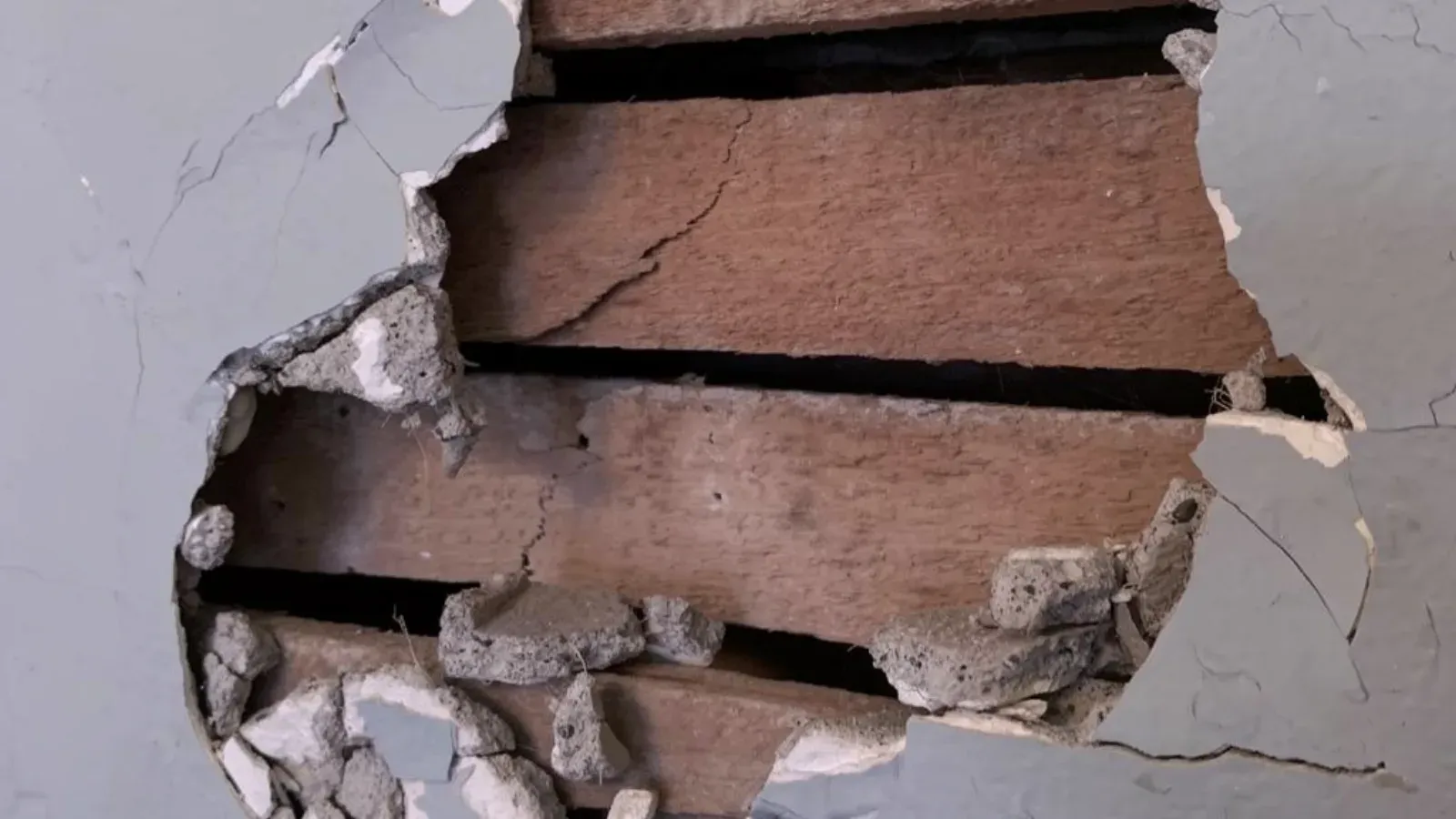
- • Chunks of old plaster that have already fallen, exposing the wood lath strips underneath
- • A wavy, uneven wall surface in a Victorian-era home that modern drywall repairs never quite match
- • A homeowner in a Belvidere Victorian is preparing to sell or renovate and needs decades of hairline cracking addressed properly, not skim-coated over
- • A ceiling section finally lets go in an older mill-worker cottage or triple-decker, dropping plaster and exposing lath
- • A homeowner is planning a renovation and has to decide whether to repair the original plaster or convert the room to drywall
Why Lowell Has So Much Original Plaster Left to Save
Belvidere’s Victorian and Colonial-era homes were built with hand-troweled, three-coat plaster over wood lath, the kind of wall assembly that predates drywall by decades and was never designed to be repaired with a drywall patch kit. A century of seasonal movement, minor settling, and the occasional vibration from nearby construction leaves that plaster keyed tightly in some spots and barely hanging on in others, often within the same wall. Lowell Quality Drywall & Plaster starts every plaster job by tap-testing the surface, listening and feeling for the difference between plaster that’s still locked to its lath and plaster that’s drummy, meaning it has separated and is essentially waiting to fall. That map decides whether a room gets repaired or converted, not a guess from across the room.
Re-Keying Versus Starting Over
Plaster fails at the key, the little wedge of material that squeezes through the gaps between lath strips and locks the coat in place from behind. When keys break, usually from age or a hard knock, the plaster can bulge or drop. Where enough keys are still intact, re-keying with modern plaster washers or adhesive stabilizes the section without removing anything, then a skim coat blends the repair into the surrounding wall. Where the lath itself has rotted from old roof leaks, or where so much plaster has already fallen that patching would be chasing failure room by room, conversion to drywall is the more honest answer. Lowell Quality Drywall & Plaster will say so plainly rather than selling a patch that won’t hold.
An Honest Conversion, Not a Downgrade
A well-executed plaster-to-drywall conversion doesn’t have to look like a downgrade. After the old plaster and lath come out, the framing gets checked and furred out as needed, new gypsum board goes up, and the whole surface is finished to a true Level 5 skim coat with multiple thin passes of joint compound rather than a standard three-coat drywall tape job. That extra finish work is what makes a converted wall in a 1900s triple-decker read as plaster, smooth, flat under raking light, no visible seams, instead of reading as an obviously modern patch dropped into an old room.
Belvidere’s Mansions and the City’s Mill-Worker Cottages Are Different Jobs
A Belvidere Victorian with 12-foot ceilings and ornamental plaster trim calls for a different touch than a modest mill-worker cottage or triple-decker unit in Back Central or South Lowell, where the original plaster is plain, functional, and often layered under decades of paint. Both are lath-and-plaster at the core, but the affluent Belvidere homes more often call for historic-sensitive skim work that preserves original wall profiles and trim relationships, while the city’s dense stock of worker housing more often makes practical sense as a conversion, especially when a room is already being opened up for other renovation work.
Lead-Safe Work Is the Default, Not the Exception
Because Lowell’s housing predates 1978 almost across the board, disturbing old plaster means EPA RRP lead-safe work practices apply as a matter of course, not a special case. Lowell Quality Drywall & Plaster sets up containment before cutting into old plaster and lath, consistent with the firm’s EPA RRP Lead-Safe Certified status and MA Dept. of Labor Standards guidance where asbestos-age materials are also a possibility in older finish layers. That protects the household during the work, not just the crew.
What Historic Review Actually Means for Interior Plaster
Homeowners in Lowell’s historic districts sometimes assume any plaster work needs Historic Board sign-off. In practice, interior finish work is typically outside exterior-facing historic review, but where a home’s plaster ceiling medallions, coving, or wall profiles are part of its character, Lowell Quality Drywall & Plaster treats matching those details as part of the job, whether the final surface is repaired original plaster or a converted, skim-coated drywall wall that carries the same lines forward.
Materials & standards
Products & materials we use
- USG Sheetrock
- National Gypsum Gold Bond
- CertainTeed
- FibaTape
Standards & codes we work to
- Massachusetts State Building Code (780 CMR)
- GA-214 finish levels (Level 0-5)
- EPA RRP (pre-1978 lead-safe)
- MA Construction Supervisor License (CSL)
- MA Home Improvement Contractor (HIC) registration
- EPA RRP Lead-Safe Certified Firm
What the terms mean
- lath and plaster
- plaster-to-drywall conversion
- re-keying
- skim coat
- Level 5 finish
- historic-sensitive skim over lath
- metal-stud framing
- corner bead
- mud and tape
Options & variants
| Option | When it applies | Cost |
|---|---|---|
| Crack repair and skim coat | Plaster is structurally sound, cracking is cosmetic | Lower cost, per-room or per-wall |
| Re-keying loose plaster | Plaster keys have broken from the lath but the surface is intact | Moderate, labor-intensive but material-light |
| Full plaster-to-drywall conversion | Plaster and lath are failed or extensively damaged | Higher cost, full demo and rebuild, but often more predictable long-term |
| Historic-sensitive skim over lath | Belvidere or historic-district homes where original wall profile must be preserved | Higher cost, slower hand-trowel process |
What affects cost
- • How much of the original lath is sound versus rotted, water-damaged, or missing, which determines whether re-keying is even viable
- • Ceiling work versus wall work: ceilings carry more risk and require more careful staging given the weight of plaster overhead
- • Whether the home falls under Historic Board review, which can affect what finish and process is expected
- • Pre-1978 construction, which is nearly all of Lowell's housing stock, triggering EPA RRP lead-safe work practices (containment, specialized cleanup) that add labor time
- • Skim coat to a true Level 5 finish takes more passes and more drying time than a standard drywall taping job, whether the surface underneath is original plaster or new board
What to expect
- 1
In-home assessment
Tap-testing the plaster to map which areas are still keyed to the lath, which are loose, and which have already failed.
- 2
Lead-safe setup on pre-1978 homes
EPA RRP containment and work practices are put in place before any plaster is disturbed.
- 3
Decision point
Repair or convert, discussed room by room based on what the assessment found and what the homeowner wants for the finished look and long-term maintenance.
- 4
For repair
Loose plaster is re-keyed or removed and patched, cracks are stabilized, and the surface is skim-coated to match the surrounding wall.
- 5
For conversion
Failed plaster and lath come out down to the studs, new metal-stud furring or blocking is added as needed, and drywall is hung and finished to a smooth skim.
- 6
Final finish and walkthrough
Surface is checked under raking light for flatness before paint, so nothing telegraphs through once it's painted.
When this isn’t the right call
- If the damage is a fresh water stain from a recent leak rather than age-related plaster cracking, water damage drywall repair is the better fit.
- If a wall or ceiling has mold growth behind it, whether under plaster or drywall, mold drywall replacement is the better fit.
- If the plaster is fully sound and the concern is only cosmetic paint wear, that's a painting job, not a plaster repair.
Frequently asked questions
Should I repair my original plaster or convert to drywall? +
It depends on how much of the plaster is still keyed to the lath. If most of it is sound, repair and skim-coating preserves the original wall and is usually more cost-effective. If large sections have already failed, conversion to drywall finished with a smooth skim coat is often more predictable long-term and avoids repeat repairs.
Will a drywall conversion look different from my original plaster? +
Not when it's finished right. Lowell Quality Drywall & Plaster finishes conversions to a smooth Level 5 skim coat that matches the look of original plaster, so the room reads the same even though the wall assembly underneath has changed.
My house is in a Belvidere historic district. Does that affect the work? +
It can affect what's expected for interior finish work depending on the specific review requirements, though interior plaster work is typically less restricted than exterior changes. Lowell Quality Drywall & Plaster can talk through what a historic-sensitive skim over lath looks like if preserving the original wall matters to the homeowner.
My house was built before 1978. Is that a problem for plaster repair? +
It means lead-safe work practices apply. Lowell Quality Drywall & Plaster is an EPA RRP Lead-Safe Certified Firm and sets up proper containment before disturbing any old plaster, which is standard procedure given how much of Lowell's housing predates 1978.
Why is my ceiling plaster cracking in a spiderweb pattern? +
That pattern usually means the plaster keys, the part that locks through the lath, have started breaking loose, often from age, minor settling, or vibration over decades. It's a sign to get it assessed before a section lets go on its own.
Can you match the texture on just one damaged wall in a room? +
Yes. Whether it's a hand-troweled plaster finish or a sprayed texture, the goal is a seamless match so the repaired section isn't obvious once painted.
How long does a plaster-to-drywall conversion take for one room? +
It depends on room size and condition, but a typical bedroom or living room conversion runs several days once lead-safe containment, demo, hanging, and multiple finish coats with drying time between them are factored in.