
Signs you need this
- • A bumpy, sprayed-on acoustic ceiling that instantly dates a room and catches dust, cobwebs, and cooking grease
- • Popcorn texture that's started flaking, yellowing, or shedding little bits onto the floor and furniture
- • A ceiling stain or a small repair that can't be fixed cleanly because any patch breaks the popcorn texture and shows
- • A newly bought home from the 1960s or 70s where every ceiling still wears the original acoustic spray the buyer wants gone
- • A homeowner renovating or repainting who wants to modernize the whole room, with the dated ceiling the last thing holding the look back
- • A water stain or crack in the popcorn ceiling that can't be patched invisibly, pushing the owner to remove the texture entirely and go smooth
Test the Ceiling Before You Touch It
A popcorn ceiling looks like a cosmetic problem, and in the end it is, but the first step is not a scraper. Acoustic ceiling texture sprayed before the early 1980s commonly contained asbestos, and the single worst thing anyone can do is scrape it dry and send those fibers into the air. Nearly all of Lowell’s housing predates 1978, which means almost every popcorn ceiling in the city is old enough to warrant a test. Lowell Quality Drywall & Plaster takes a sample and sends it for asbestos analysis before anything is disturbed. Only after the ceiling tests clear does the removal go forward. If it tests positive, the work stops and the owner is directed to a licensed abatement contractor, because abating asbestos is a separate, regulated trade, not drywall work. That order, test first, scrape second, is not optional on a building this old.
Why Lowell Ceilings Wear Popcorn in the First Place
Acoustic popcorn ceilings were standard in homes built and finished through the 1960s and 70s, prized then for hiding imperfections and cutting noise. A lot of Lowell’s housing carries it, particularly homes and condos in Centralville, the Highlands, and South Lowell that were built or renovated in that window. The texture dates a room instantly, collects dust and cobwebs, and yellows over time, and once it starts flaking or shedding it becomes a maintenance nuisance on top of a dated look. It also makes ceiling repairs miserable, since any patch breaks the pattern and shows, which is often what finally pushes an owner to remove the texture entirely rather than keep fighting a ceiling that won’t patch cleanly.
Scrape or Skim: Reading the Ceiling
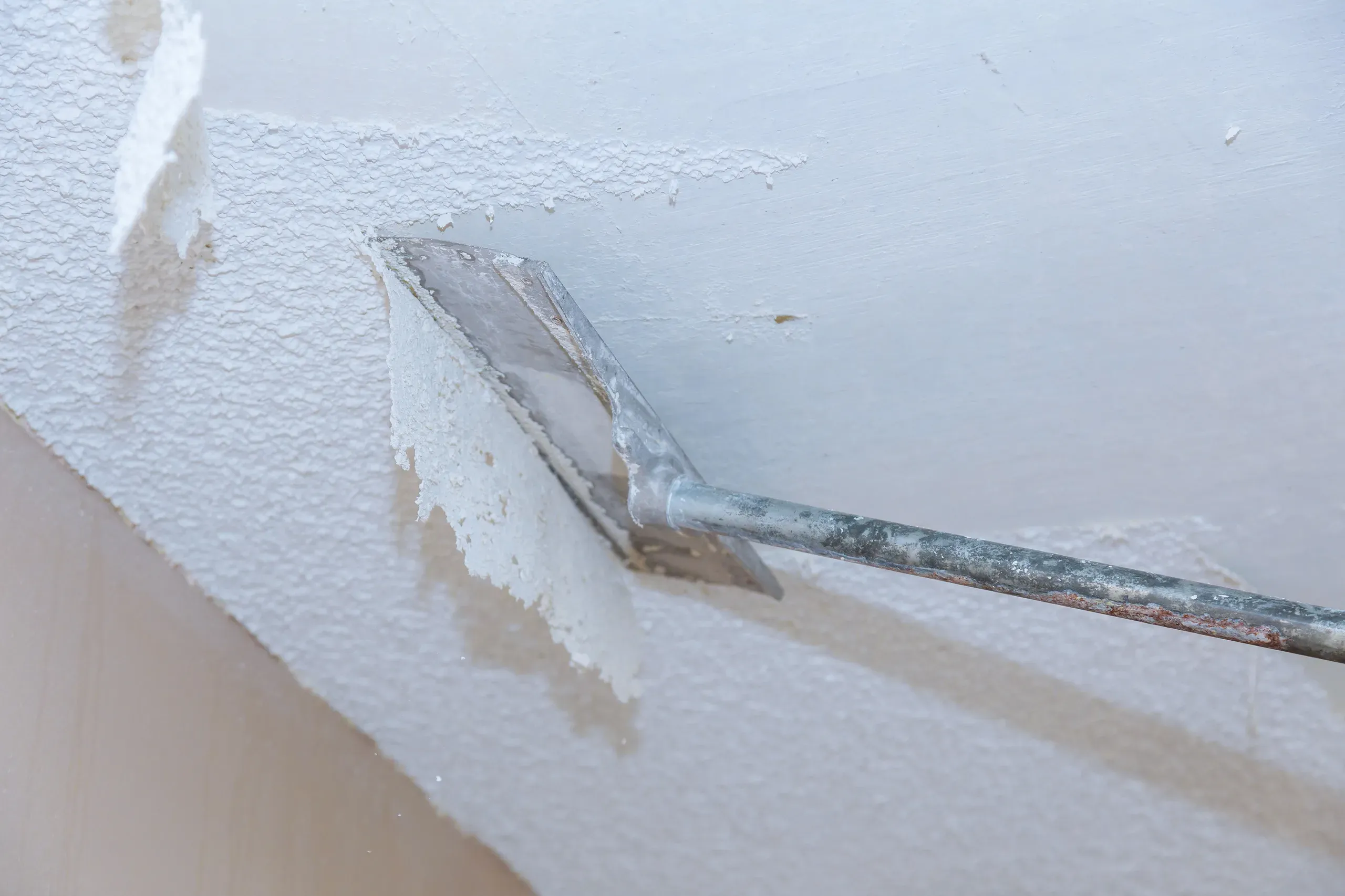
Once a ceiling tests clear, there are two ways to a smooth finish, and the right one depends on the ceiling. Unpainted popcorn absorbs water, so it’s lightly wetted and scraped off, which comes away fairly cleanly. A painted popcorn ceiling is a different animal: the paint seals the texture so it won’t take up water, and it clings hard to the ceiling, resisting the scraper. On those, Lowell Quality Drywall & Plaster often skims over the texture to a smooth plane instead of fighting to scrape it, which is cleaner and gives a better result. The crew decides scrape versus skim on-site, based on whether the ceiling is painted and what shape it’s in.
What Scraping Reveals Underneath
Popcorn texture was often sprayed on precisely because it hid a ceiling that was never finished smooth underneath. Scraping it off frequently exposes taped seams that were never fully coated, hairline cracks, old water repairs, or brown-coat damage on a plaster ceiling. That’s expected, and it’s why removal is more than a scrape: after the texture is off, Lowell Quality Drywall & Plaster repairs what the scraping reveals, then skims the whole ceiling flat to a smooth, even plane and primes it ready for paint. A ceiling that’s just scraped and left is still a rough ceiling. The finished result is a true smooth surface, the same standard the crew brings to a Level 5 wall.
A Messy Job Done Clean
Popcorn removal is wet and messy by nature, so the room gets fully protected before anything starts, floors, walls, and fixtures covered, with the mess contained to the room being worked. Cleanup is part of the job. None of that changes the one rule that governs the whole process on Lowell’s old housing stock: nothing gets scraped until the ceiling has been tested and cleared. That is how Lowell Quality Drywall & Plaster gives an owner the modern smooth ceiling they want without turning a cosmetic upgrade into a health hazard.
Materials & standards
Products & materials we use
- USG Sheetrock
- National Gypsum Gold Bond
- joint compound
Standards & codes we work to
- EPA RRP
- MA Department of Labor Standards (asbestos)
- MassDEP
- ASTM C1396
- GA-214 finish levels
- MA Construction Supervisor License (CSL)
- MA Home Improvement Contractor (HIC) registration
What the terms mean
- popcorn ceiling
- acoustic ceiling texture
- asbestos testing
- scrape and skim
- skim coat
- Level 5 finish
- ceiling resurfacing
- popcorn removal
Options & variants
| Option | When it applies | Cost |
|---|---|---|
| Test then scrape and skim smooth | Ceiling tests clear for asbestos; texture scraped and refinished to smooth | Standard scope, driven by ceiling area and condition underneath |
| Skim over rather than scrape | An unpainted or difficult ceiling where a skim-over to smooth is cleaner than scraping | Similar labor, avoids the scrape mess on stubborn ceilings |
| Scrape plus ceiling repair | Scraping reveals cracks, old patches, or seam damage that needs fixing before finishing | Higher, adds repair to the refinish |
| Positive asbestos result | Test comes back positive | Job stops; licensed abatement required first, not performed by a drywall crew |
What affects cost
- • The ceiling area, since removal and refinishing is priced by the square footage overhead
- • Whether the ceiling has been painted, because a painted popcorn ceiling resists scraping and often has to be skimmed over smooth instead
- • The condition of the surface underneath, since scraping frequently reveals old cracks, brown-coat damage, or seam failures that have to be repaired before the smooth finish goes on
- • Ceiling height and access, as high or stairwell ceilings are slower and need more staging
- • The asbestos test itself and, if it comes back positive, the fact that licensed abatement must happen first, a separate trade, not part of the drywall scope
What to expect
- 1
Asbestos test first
On any ceiling that could predate the early 1980s, a sample is taken and sent for analysis before anything is disturbed. Nearly all of Lowell's housing is old enough to warrant this.
- 2
Review the result
If it's clear, the removal is scheduled. If it's positive, the owner is directed to licensed abatement before any drywall work happens.
- 3
Protect the room
Floors, walls, and any fixtures are covered, since popcorn removal is a wet, messy scrape.
- 4
Scrape or skim
The texture is scraped off, usually after light wetting to control dust, or on a painted or stubborn ceiling, skimmed over smooth.
- 5
Repair and skim flat
Any cracks or damage revealed underneath are repaired, then the whole ceiling is skimmed to a smooth, even plane.
- 6
Prime ready for paint
The finished ceiling is primed and left ready for a smooth ceiling paint.
When this isn’t the right call
- If the ceiling texture is a knockdown or orange peel the owner wants kept and just needs a repair blended in, texture matching is the better fit.
- If the ceiling is stained or sagging from an active or recent leak that needs fixing first, water damage drywall repair is the better fit.
- If an asbestos test comes back positive, that requires a licensed abatement contractor before any removal. Lowell Quality Drywall & Plaster does not scrape a positive ceiling.
Frequently asked questions
Do I need an asbestos test before removing a popcorn ceiling? +
If the ceiling could date to before the early 1980s, yes, and in Lowell that's almost always the case since nearly all the housing predates 1978. Acoustic texture from that era commonly contained asbestos, and scraping it dry is what releases fibers. Lowell Quality Drywall & Plaster tests the ceiling before disturbing it, every time.
What happens if the test comes back positive? +
The job stops at that point. A positive ceiling has to be handled by a licensed asbestos abatement contractor first, which is a separate trade and not drywall work. Once the material has been abated, Lowell Quality Drywall & Plaster can come back and finish the ceiling smooth.
Can you just cover the popcorn instead of scraping it? +
Sometimes, yes. A painted or stubborn popcorn ceiling that tests clear can be skimmed over smooth rather than scraped, which avoids the scrape mess. Which approach is better depends on whether the ceiling is painted and what shape it's in, and that's decided on-site.
Why is a painted popcorn ceiling harder to remove? +
Unpainted popcorn absorbs water and scrapes off fairly cleanly. Paint seals the texture so it won't take up water, which makes it resist scraping and cling to the ceiling. A painted ceiling often gets skimmed smooth instead of scraped, which is why paint changes the scope.
How messy is popcorn ceiling removal? +
It's a wet, messy scrape, so the room is fully covered first, floors, walls, and any fixtures. The mess is contained to the room being worked, and cleanup is part of the job, but it's not a dust-free process, which is another reason the ceiling gets protected before anything starts.
Will the ceiling be perfectly smooth when you're done? +
Yes. After the texture comes off, the surface underneath is repaired where scraping reveals cracks or old damage, then skimmed flat and primed, so the finished ceiling is a smooth, even plane ready for paint, not just a scraped-down bumpy surface.