
Signs you need this
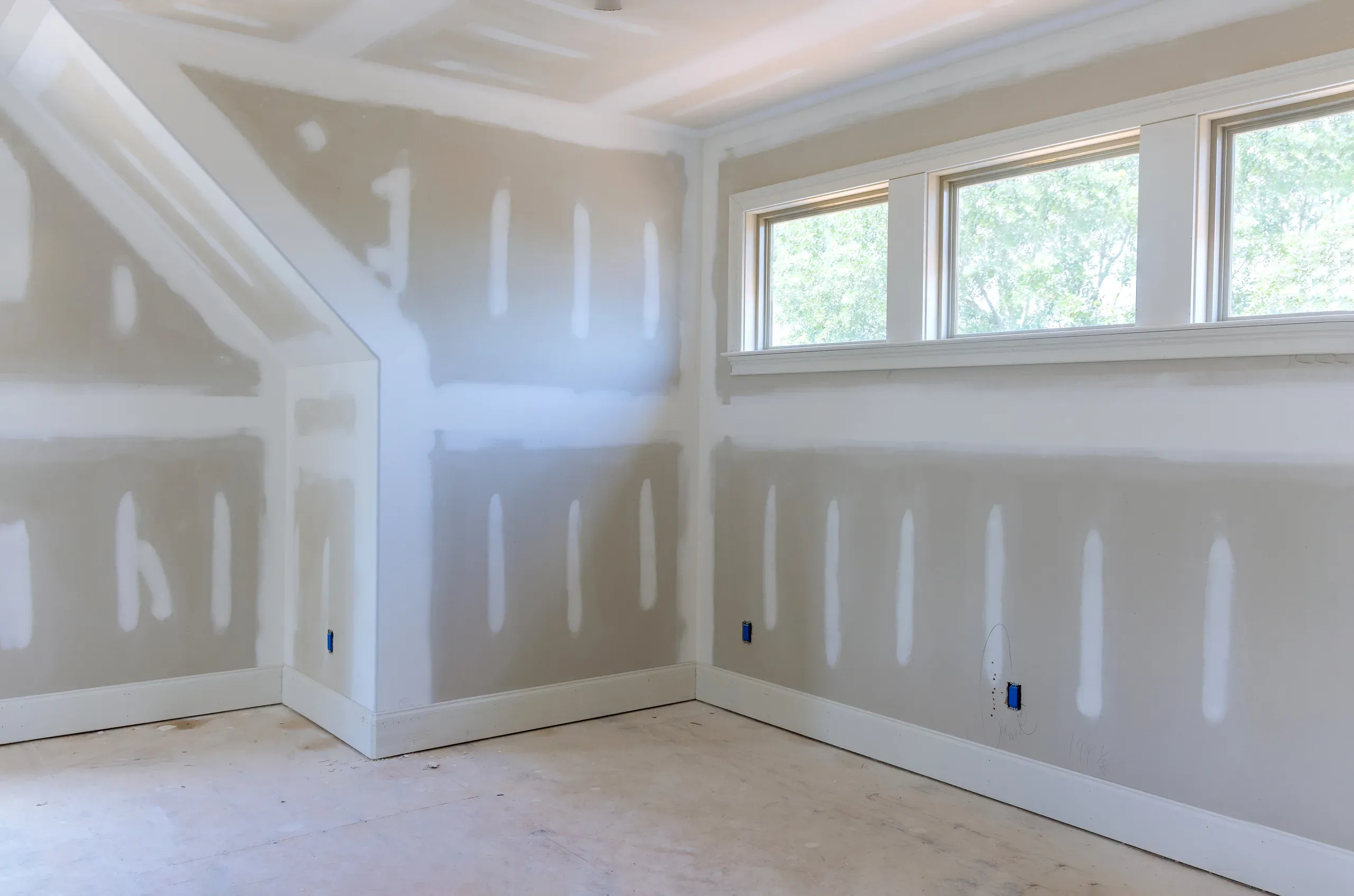
- • Board is hung, screwed off, and standing in the rough, but every seam, corner, and screw head is still showing and nothing can be painted yet
- • A DIY hanger or a framer got the drywall up but the taping and mudding is beyond their skill or patience
- • An earlier finish job that shows: seams telegraphing through paint, ridged or cracked tape, visible screw dimples, and corners that aren't crisp
- • A remodel or new build where the general contractor needs a dedicated finisher to tape and coat the board a hanging crew put up
- • A homeowner or contractor hangs the board themselves to save money, then realizes finishing it flat is the hard part and hires it out
- • A previous finisher's work looks rough under the first coat of paint and the owner wants it corrected before repainting
The Finish Is What People Actually See
A wall’s whole appearance comes down to the finish, because paint hides nothing. It doesn’t cover a ridged seam, a proud screw, or a wavy corner; it highlights them. Lowell Quality Drywall & Plaster finishes drywall that’s already hung, taking rough board with every seam and fastener showing and turning it into a flat, feathered surface ready for paint. That means embedding tape over every seam and inside corner, setting corner bead on the outside corners, and coating the joints in successive passes of joint compound, each wider and thinner than the last, until the seam disappears into the board. It’s a craft measured in feathered edges and flatness under a work light, not in how fast the mud goes on.
Level 4 and Level 5, by the GA-214 Standard
The Gypsum Association’s GA-214 standard defines drywall finish levels from 0 to 5, and the two that matter for a finished room are Level 4 and Level 5. A Level 4 finish, the standard for most painted walls, coats the tape, corners, and fastener heads smooth and reads flat under normal room lighting. A Level 5 finish adds a thin skim coat troweled over the entire surface, and it earns its cost in specific conditions: walls under raking window light, surfaces near sidelighting, walls getting gloss or semi-gloss paint, and open sightlines where any seam variation would show. Lowell Quality Drywall & Plaster sets the level to the room, recommending a Level 5 where the light or the paint would betray a Level 4, and not upselling a skim coat where a Level 4 will look perfect.
Why a Good Hang Makes a Good Finish
Finishing is only as good as the hang underneath it. Board that’s butted tight, fastened on the right schedule with screws set just below the paper, and squared at the corners gives a taper a clean surface to build on. A rough hang, with proud screws, wide gaps, and mismatched board edges, means more fill, more coats, and more sanding to reach the same flat result. Lowell Quality Drywall & Plaster checks how the board was hung before quoting the finish, because a homeowner’s or a framer’s hang varies a lot, and the condition of that hang is the single biggest factor in how much finishing labor the job takes.
Correcting a Finish That Went Wrong
Not every call is fresh board. Plenty are walls that were finished once and didn’t hold up: seams telegraphing through the paint, tape that ridged or cracked, screw dimples popping, corners that never came out crisp. Those failures come from an under-built finish, too few coats, compound that wasn’t feathered wide enough, or tape that wasn’t properly embedded. Lowell Quality Drywall & Plaster corrects them by re-coating or re-taping the failed joints, and where a whole wall reads rough, a skim coat over the full surface evens it out before repaint. Fixing it right once is cheaper than repainting over the same flaws a second time.
A Clean Handoff to the Painter
The finish stage sits right before paint, so a clean handoff keeps the whole project moving. Lowell Quality Drywall & Plaster builds each coat with drying time between passes, sands to the agreed level, checks the surface under work light, and leaves it dust-knocked and primed-ready. On a contractor’s schedule that means the painter starts on a flat, sound wall on the promised day. On a homeowner’s own project it means the hard, dusty part is handled by someone who does it every day, and the room is finally ready for the color that made them start.
Materials & standards
Products & materials we use
- USG Sheetrock joint compound
- FibaTape
- National Gypsum
- corner bead
Standards & codes we work to
- GA-214 finish levels (Level 0–5)
- ASTM C1396
- Massachusetts State Building Code (780 CMR)
- MA Construction Supervisor License (CSL)
- MA Home Improvement Contractor (HIC) registration
What the terms mean
- taping and mudding
- seam taping
- tape coat
- build coats
- feathering
- skim coat
- Level 4 finish
- Level 5 skim
- corner bead
- joint compound
Options & variants
| Option | When it applies | Cost |
|---|---|---|
| Level 4 finish | Standard painted walls and ceilings under normal lighting | Baseline finish, most common |
| Level 5 skim coat | Walls under raking or critical light, gloss paint, open sightlines | Higher, full-surface skim adds a coat and labor |
| Finish only, board already hung | Someone else hung the board; crew tapes and finishes | Standard, no hang labor |
| Repair and refinish | Correcting a rough or failed earlier finish before repaint | Varies with how much of the old work has to be redone |
What affects cost
- • Total seam and corner footage to tape and coat, which tracks with the square footage of board hung
- • The finish level required: a Level 4 versus a full-surface Level 5 skim, which adds a coat and significant sanding labor
- • The quality of the hang: tightly butted board with fasteners set correctly finishes faster than a rough hang with proud screws and wide gaps
- • Ceiling versus wall footage, since overhead finishing is slower and harder on labor
- • Whether an existing rough finish has to be corrected first, which can mean re-taping seams or skimming over telegraphing joints
- • Access and height: tall stairwells, cathedral ceilings, and tight spaces slow the coating and sanding passes
What to expect
- 1
Walkthrough
The crew looks at the hung board, checks how it was fastened and butted, and confirms the finish level the room needs.
- 2
Tape coat
Paper or mesh tape is embedded over every seam and inside corner, and corner bead is set on outside corners.
- 3
Fill and build coats
Seams and fasteners get successive coats of joint compound, each wider than the last, feathered out flat.
- 4
Level 5 skim, if specified
A thin skim coat is troweled over the full surface where the room's lighting or paint calls for it.
- 5
Sanding
Dried compound is sanded smooth, and the surface is checked under work light for flatness and feathered edges.
- 6
Prep and handoff
The finished surface is left dust-knocked and primed-ready, so the painter starts on a clean, flat wall.
When this isn’t the right call
- If the board hasn't been hung yet and needs installing first, drywall installation and hanging is the better fit.
- If the surface is old lath-and-plaster with cracking or bond failure rather than new drywall to finish, plaster repair and plaster-to-drywall conversion is the better fit.
- If the wall is water-stained or the board is soft from a leak, the damaged board has to come out first; water damage drywall repair is the better fit.
Frequently asked questions
I hung my own drywall. Can you just finish it? +
Yes, that's exactly this service. Lowell Quality Drywall & Plaster tapes, muds, sands, and preps board someone else hung, leaving it primed-ready for paint. A quick look at how the board was fastened and butted tells the crew how much prep the hang needs before finishing starts.
What's the difference between Level 4 and Level 5? +
A Level 4 finish coats the tape, corners, and fasteners smooth and is the standard for most painted walls under normal lighting. A Level 5 adds a thin skim coat over the entire surface, which matters where light rakes across the wall, on walls getting gloss paint, or in open sightlines where a Level 4 can let seams show. The finish level is set by the Gypsum Association's GA-214 standard.
My seams are showing through the paint. Can you fix that? +
Usually yes. Telegraphing seams, ridged tape, and visible screw dimples come from an under-built or rushed finish. Lowell Quality Drywall & Plaster re-coats or re-tapes the problem joints, and where the whole wall reads rough, a skim coat over the surface evens it out before repaint.
Do you hang the board too, or only finish? +
This service is finishing only, taping and mudding board that's already up. If you also need the board hung, or framing built first, that's the installation and hanging service, and the crew can do both stages on the same job.
How many coats of mud does a wall get? +
A Level 4 typically takes a tape coat plus two build coats, sanded between and after. A Level 5 adds a full skim coat on top of that. Each coat has to dry before the next, so a room's finish spans a few days with drying time built in, not one long day of mudding.
Will the finished wall be perfectly smooth? +
Finished to the agreed level and checked under work light, yes, the wall is flat and feathered with no visible seams or fasteners. If the room calls for a smooth Level 5 rather than a standard Level 4, that's the finish that holds up under strong or raking light once it's painted.